



What Is a Malivlies Machine? An Explain-First 101 for Beginners

Malivlies Machine is a stitch-bonding line that turns loose fiber webs into strong, stable nonwovens with speed and consistency.
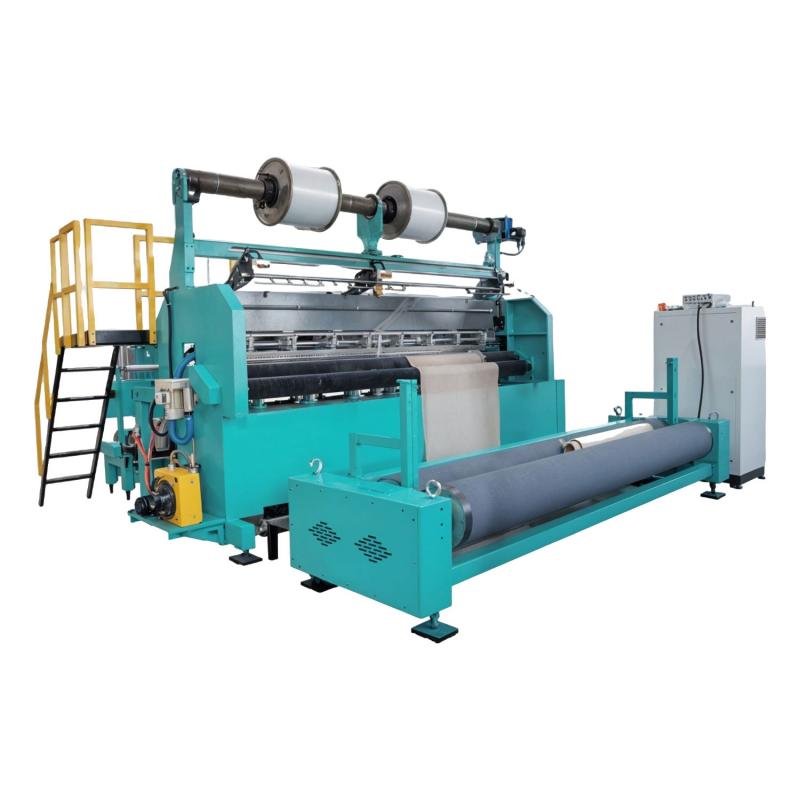
What Is a Malivlies Machine?
A Malivlies Machine produces stitch-bonded nonwoven fabric by mechanically stitching a fibrous web with yarns to create strength and dimensional stability. Unlike woven or knitted textiles, there is no interlacing of warp and weft. Unlike needlepunch, the web is not entangled by barbed needles alone. In Malivlies, stitches are laid continuously across the web to stabilize fibers and open up precise patterning, multi-layer builds, and tuneable mechanical behavior. The result is a light, high-strength, economical fabric for technical uses requiring consistency, fast output, and programmable performance.
How Stitch-Bonding Works in a Malivlies Machine
- Stitch-bonding unit: needle bed, sinkers, and guide bars that lay binder yarns through the nonwoven web.
- Pattern drive: mechanical or digital shogging to define stitch density and path.
- Take-up and winding: tension-controlled delivery to preserve fabric quality.
Process Flow
- Feed the fiber web into the Malivlies Machine with controlled tension.
- Guide bars deliver yarns (polyester, glass, aramid, or biobased options) and execute lateral movement as needles penetrate the web to form stitches.
- Each stitch tacks fibers and effects interlayer bonding when multiple webs or films are stacked.
- Typical gauges range from 14 to 24 needles per inch, with stitch density calibrated to specified strength and drape.
- Stitch-bonding unit: needle bed, sinkers, and guide bars that carry binder yarns through the web.
- Pattern drive: mechanical or digital shogging to set stitch density and travel.
- Take-up and winding: tension-controlled take-up to maintain fabric quality during winding.
Because the stitch adds strength mechanically, many recipes avoid chemical binders, reducing cure time and emissions.
Why It Matters: Practical Benefits You Can Measure
For manufacturers, the Malivlies Machine translates into predictable quality and lower operating cost.
- Compared with needlepunch or chemical bonding, stitch-bonding often reaches the same tensile and tear targets at lower energy per square meter because it relies on controlled stitching rather than high-impact entanglement or thermal curing.
- Plants report meaningful savings in scrap as well, since the process is gentle on fibers and edge trim can be minimized with stable web control.
- Pattern changes are quick, and multi-layer builds unlock hybrid products without extra lamination steps.
In sectors where qualified material and stable supply win business, that combination of throughput, repeatability, and design flexibility is a tangible edge.
Where Malivlies Fabrics Win
Applications favoring high stiffness-to-weight, clean surfaces, and tailored structure benefit most.
- Automotive headliners and door inserts use stitch-bonded nonwovens to hit acoustic and weight targets while supporting formability in press molding.
- Footwear makers use them for reinforcement, heel counters, and breathable uppers where low fray and consistent thickness are key.
- Filtration producers deploy Malivlies prefilters and support layers because stitch-defined channels can manage flow and dust loading.
- In construction, geotextiles and roofing substrates gain dimensional stability that resists creep and wrinkling.
- Home and bedding leverage soft, drapable versions for mattress assemblies and upholstery.
- Basis weights from roughly 60 to 800 gsm are common, and adding films, scrims, or recycled fibers allows cost and performance tuning across tiers.
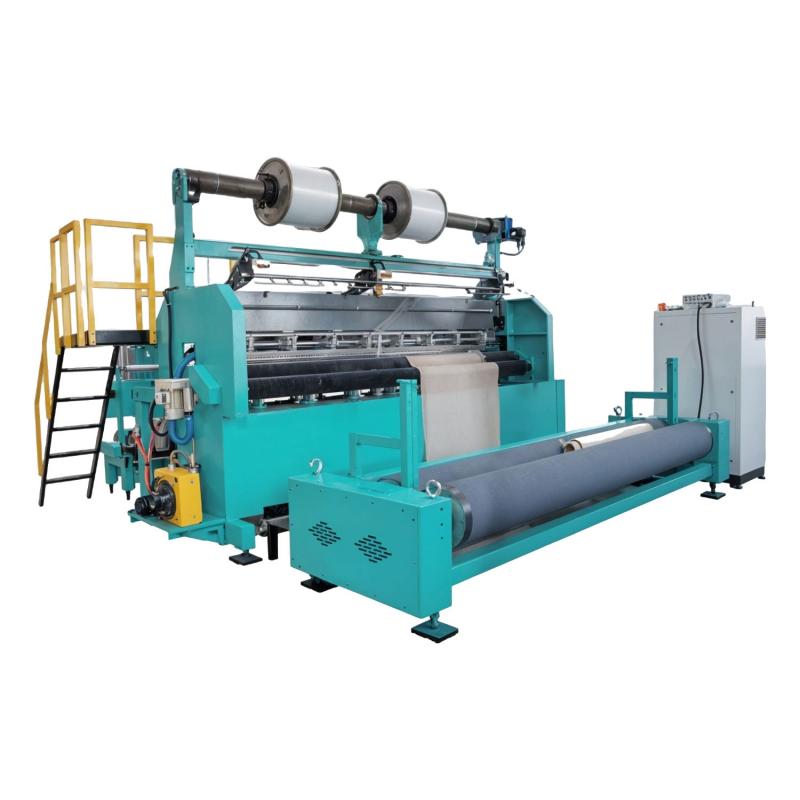
Key Specs to Check Before You Buy
Choose specifications that map to your products, not just a headline speed. The right Malivlies Machine will make your operators’work easier and your cost per square meter predictable.
- Working width: 2.4- 6.0 m ranges cover most automotive, filtration, and construction lines.
- Gauge and stitch density: 14- 24 npi and variable stitches/cm to balance drape versus strength.
- Yarn compatibility: polyester, PP, glass, aramid, and bio-based; fast, toolless creel changes keep changeover tight.
- Web infeed: single or multi-layer infeed enabling hybrid constructions (e.g., fiber web + film + scrim).
- Patterning: digital shogging for agile recipe updates and limited downtime.
- Inline QA: camera systems monitor stitch integrity and basis weight, with closed-loop tension control.
- Energy profile: kWh/m² visibility for cost oversight; efficient drives decrease total energy usage.
For capacity planning, a 3.2 m line at 120 m/min can deliver roughly 6,900 – 7,500 m² per hour depending on overlap and wind-up efficiency. That throughput supports both just-in-time production and long runs with stable quality.
Selecting a Malivlies Machine Vs. Other Nonwoven Routes
Many producers compare stitch-bonding to needlepunch, spunlace, or thermal bonding. The decision often rests on end-use specifications and total cost of ownership. Stitch-bonding shines when you need:
- High stability without heavy binder add-on
- Clean surfaces and low fuzz for lamination or molding
- Designable patterns to tune stiffness, air permeability, or acoustic response
- Ability to incorporate recycled fibers while maintaining mechanical targets
From a market standpoint, nonwovens continue to expand in mobility, hygiene, filtration, and construction. Independent industry analyses place the global nonwoven fabrics market in the tens of billions of dollars, with mid – single-digit annual growth driven by lightweighting, sustainability mandates, and electrification in vehicles – which raises acoustic and thermal management needs. Stitch-bonded nonwovens are a small but growing slice of that pie, particularly where repeatable forming and hybrid structures create value.
Getting Started from Grand Star Technology
In Grand Star Technology’s Malivlies line, working widths run from 2000 mm up to 6000 mm, making it easy to size throughput to demand. Select F7 – F22 gauges to configure stitch structure, breathability, and hand feel for the intended use.
- Gauge options F7- F22 to fine-tune mechanical properties, fabric coverage, and visual finish for medical, apparel, and interior textiles.
- Integrated stitch-forming bars- compound needle, closing wire, knock-over sinker, supporting, and counter-retaining- deliver stable stitches at speed.
- Pattern consistency via 1- 2 ground guide bars with N-drive and a single pattern disc for controlled patterning.
- Yarn and Fabric Control: Electronic let-off and take-up, both geared-motor driven with frequency converters for precise tensioning.
- Batching: Friction drive with pressure roller; maximum batch diameter 914 mm (36 inches) to manage rolls efficiently.
Warp beam support is available in one or two positions for sectional use, with a maximum flange diameter up to 30. This flexibility helps you scale beam changes and reduce downtime in multi-style production.
Why Grand Star Technology Makes Ownership Easier
A Malivlies Machine is only as good as the support that stands behind it. Grand Star Technology provides installation, operator training, and ongoing technical service tailored to your plant.
We start with professional manuals, online guidance, and an instructional video library. We complement these with on-site sessions, so your team learns on the exact materials and settings you plan to run. Our warp knitting training curriculum covers stitch theory, bar setup, guide bar selection, yarn handling, and preventive maintenance. In regions with local service teams, we offer fast on-site response. Where local teams are not yet present, we provide real-time online support first, and dispatch engineers from the nearest service hub if hands-on assistance is required.
Reliability matters. The Malivlies Machine’s motion system, electronic let-off, and take-up reduce tension drift and improve first-time-right rates. The touch screen interface keeps operators informed. Power-failure safety features protect your work in progress. Together, these design choices lower waste, shorten ramp-up, and support consistent quality across shifts.
Call to Action: Ready to see stitch-bonding on your material? Send us your fiber web or target spec, and we will run a Malivlies Machine trial, provide a data-backed sample report, and help you map capacity, cost per square meter, and a phased scale-up plan. Book a consultation or request a sample run to turn your concept into a qualified fabric, faster.

Hey, I’m Vincent!
Solving complex challenges with precision and creativity in the warp knitting industry. Passionate about advancing textile engineering and turning innovative ideas into reality. Shaping the future of warp knitting.


