



Composite Warp Knitting for Industrial Use: Servo Drive and E7 Gauge

Warp knitting for industrial use is a different machine problem from apparel knitting. The fabric is a reinforcement, not a garment: it has to hold yarn straight, place it in more than one direction, and repeat that placement identically over a long run. That is why a composite warp knitting machine is specified around servo control and weft insertion rather than around speed.
This page covers the configuration we build for composite reinforcement work, the automation that keeps it repeatable, and what to check before it lands on your floor.
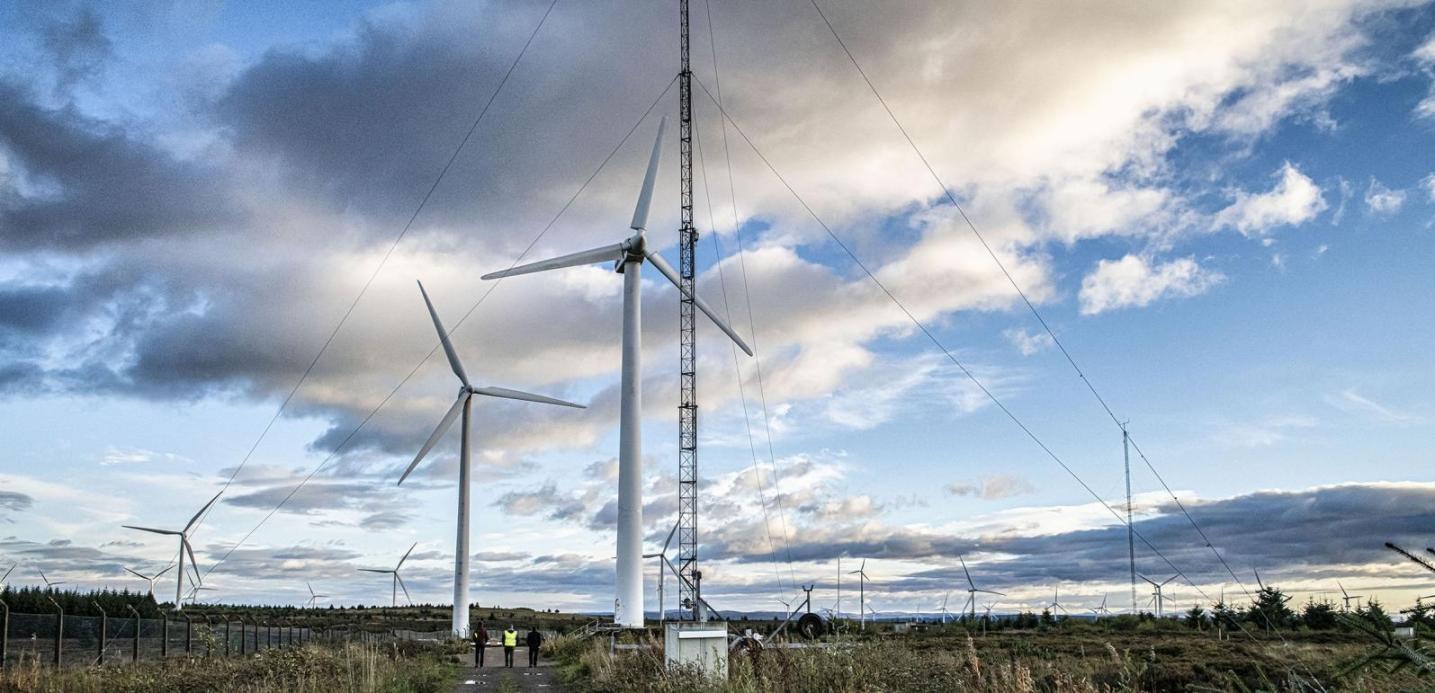
Where the fabric ends up decides the machine
The end uses are demanding in a specific way. Wind turbine blades, aircraft cabin structures and advanced laminates for aviation and marine service all need multi-directional strength, which means the reinforcement yarn has to be laid where the load is, not wherever the loop takes it.
That requirement drives the servo control system. Servo control is what makes weft insertion precise and the chopping motion consistent, and those two motions are what put yarn on a defined axis. Without them you get a knitted fabric; with them you get a reinforcement with predictable mechanical behaviour.
The published configuration
| Item | Specification |
|---|---|
| Working widths | 2565 mm (101 in) and 4496 mm (177 in) |
| Gauge | E7 |
| Knitting elements | Compound needle bars, sinkers, support bars, dual ground guide bars |
| Yarn let-off | Servo-controlled, per warp beam position |
| Drive synchronisation | Independent frequency converters |
| Take-up and batching | Electronically managed |
| Patterning | N-drive system with tempo-changing gear and integrated pattern disc |
| Operator interface | Touchscreen panel in the main control cabinet, live tension and motor data |
Two widths is a deliberate choice rather than a limitation. The 2565 mm machine suits development work and small-batch production where trial cost matters; the 4496 mm machine is the industrial-scale option. Running trials at the same gauge and element set as production is what keeps a first-article approval from turning into a re-qualification.
Why E7 and compound needles for reinforcement work
E7 is a coarse gauge, and that is the point. Reinforcement yarns are heavy and the structure is open, so the machine is built around holding large yarn without abrading it rather than around loop density.
Compound needle bars, sinkers, support bars and dual ground guide bars work as one set here. The combination is what holds stitch density and yarn tension steady over long production cycles – and long cycles are the norm in composite work, where a single blade programme can run for days without a specification change.
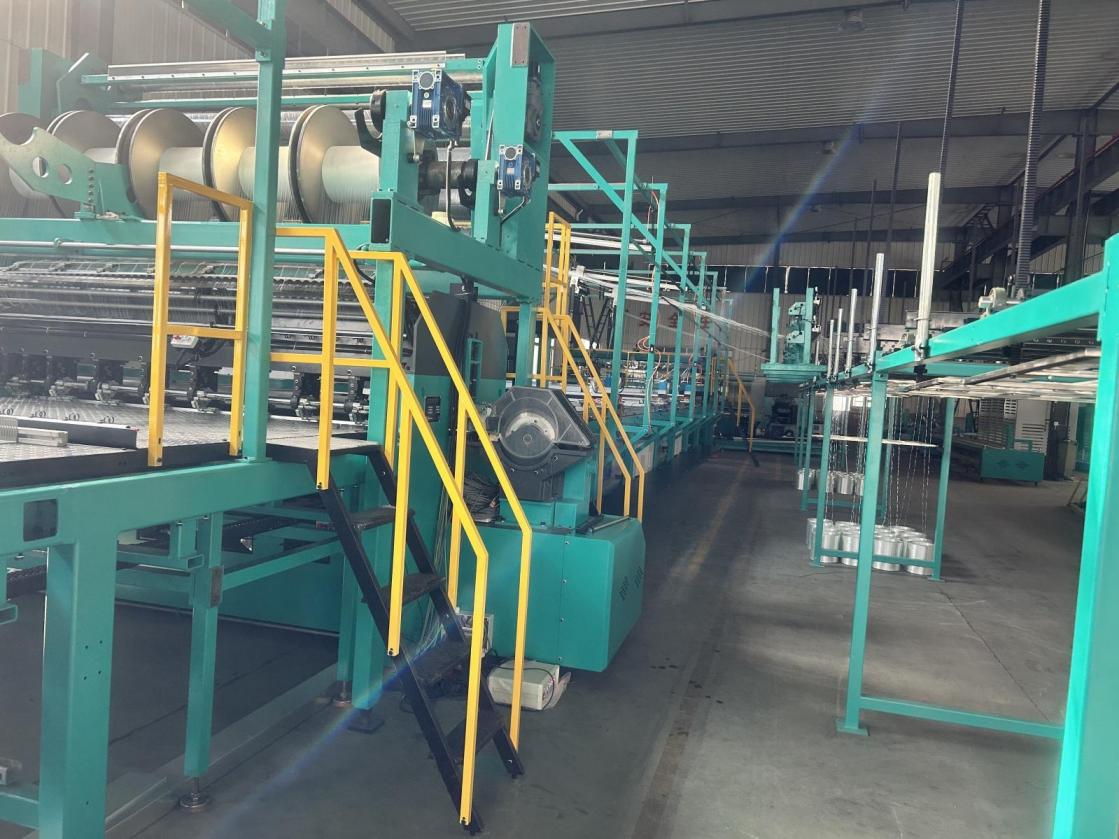
Automation that removes manual drift
Fixed settings and manual adjustment are where repeatability goes on an industrial line. Three systems replace that:
- Servo-controlled yarn let-off at each warp beam position, so tension is set per beam rather than as one compromise
- Independent frequency converters keeping movement synchronised across the machine
- Electronically managed fabric take-up and batching, so roll build does not drift over a long run
All of it reports to a touchscreen in the main control cabinet, with real-time data from fabric tension to motor performance. The value of live tension data is not the display – it is that a technician can correct during the run instead of scrapping after it.
For plants running more than one specification, the N-drive patterning system with tempo-changing gear and integrated pattern disc is what shortens the changeover. Fewer manual steps between products is directly fewer opportunities for a setting to be entered wrong.
Is this the right machine for your work
If you supply reinforcement fabric for wind energy, aerospace, marine or automotive structures, and multi-directional yarn placement is on your specification, then this configuration is the fit and the deciding number is width.
If you are knitting fine or fashion fabric, this is the wrong machine class entirely – E7 and reinforcement-grade elements will not produce it, and no amount of control tuning changes that. And if your programme is single-axis, a simpler warp knitting configuration will cost less to buy and to run.
Support through the machine life
We have delivered machines to clients in more than 20 countries over the past decade, and support runs past commissioning: on-site installation and hands-on training, online video tutorials and manuals for daily operation, regular checkups and technical visits every one to two months, and fast-response support through local teams or remote diagnostics.
Dedicated service teams operate in India, Turkey, Vietnam, Indonesia and the United States, with remote support covering regions without a local presence. Engineers work directly with production teams on motor calibration and yarn tension settings tuned to a specific programme, which is where most of the long-term efficiency actually comes from. Wear elements and replacement parts for these lines are listed on the group warp knitting spare parts pages.
Before requesting a configuration, have your reinforcement specification, required fabric width, yarn type and axis count ready. Those four items are enough to size the machine.
Frequently Asked Questions
What working widths and gauge does the composite warp knitting machine come in?
Two working widths are available, 2565 mm (101 in) and 4496 mm (177 in), both running an E7 gauge. The narrower machine suits development and small-batch work, the wider one industrial-scale production. Running trials at the same gauge and element set as production is what avoids a re-qualification later.
Why does composite reinforcement fabric need servo control?
Reinforcement fabric has to place yarn on a defined axis so the finished laminate has predictable multi-directional strength. Servo control is what makes weft insertion precise and the chopping motion consistent. Without those two motions held accurately you get a knitted fabric rather than a reinforcement with reproducible mechanical behaviour.
How is yarn tension controlled across the machine?
Yarn let-off is servo-controlled at each warp beam position, so tension is set per beam instead of as a single compromise across the machine. Independent frequency converters keep movement synchronised, and take-up and batching are electronically managed so roll build does not drift over a long run.
How quickly can the machine change between specifications?
Pattern changes run through the N-drive patterning system, using a tempo-changing gear and an integrated pattern disc to cut setup time. The practical benefit is fewer manual steps between products, which removes the most common source of a mis-entered setting during changeover.
What after-sales support is provided?
On-site installation and hands-on training, online video tutorials and manuals, regular technical visits every one to two months, and fast-response support through local teams or remote diagnostics. Service teams operate in India, Turkey, Vietnam, Indonesia and the United States, with remote support covering other regions.

Hey, I’m Vincent!
Solving complex challenges with precision and creativity in the warp knitting industry. Passionate about advancing textile engineering and turning innovative ideas into reality. Shaping the future of warp knitting.


