



Tricot 2 Bars Machine for Mosquito Nets: Precision for Reliable Protection

A Tricot 2 bars Machine for Mosquito Nets is where “yarn control” turns into real protection. In mosquito netting, the buyer is not paying for a roll that looks fine once—they are paying for repeatable mesh, stable dimensions, and fabric that stays serviceable after packing, transport, and everyday handling.
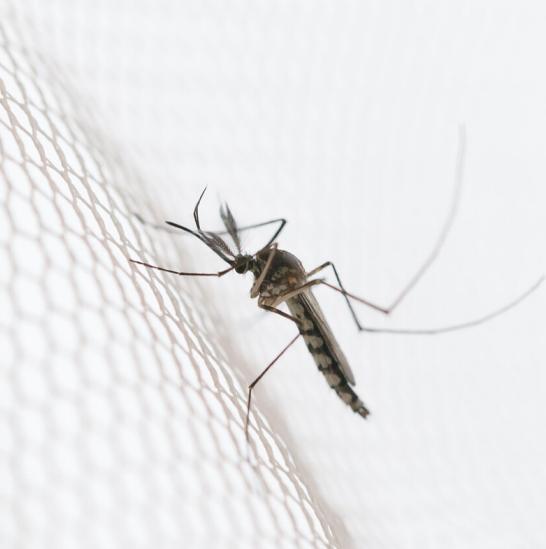
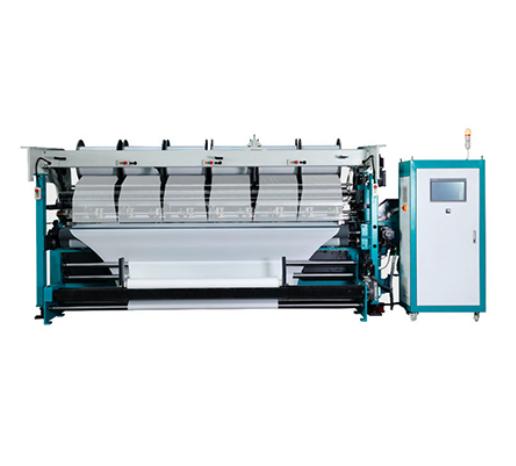
At Fujian Grand Star Technology Co., Ltd., mosquito-net equipment is developed with a manufacturing-first mindset: tension stability, controlled take-up, and built-in monitoring should reduce variation before it becomes scrap. That matters because institutional tenders and established brands judge net performance using measurable standards, not subjective impressions.
Why Net Consistency Matters Beyond Appearance
Mosquito nets are closely tied to malaria control programs. World Health Organization describes vector control as a vital component of malaria control and elimination, and notes that it currently recommends deploying either insecticide-treated nets (ITNs) or indoor residual spraying (IRS) in most areas at risk.
Because nets are used at scale, “small” production drift can have outsized consequences: uneven mesh counts, weak lines, or early hole formation can reduce perceived reliability and shorten useful life. For this reason, major guidance documents treat physical integrity as something that can be measured and trended over time, rather than judged by feel.
What Buyers Measure in Mosquito Net Procurement
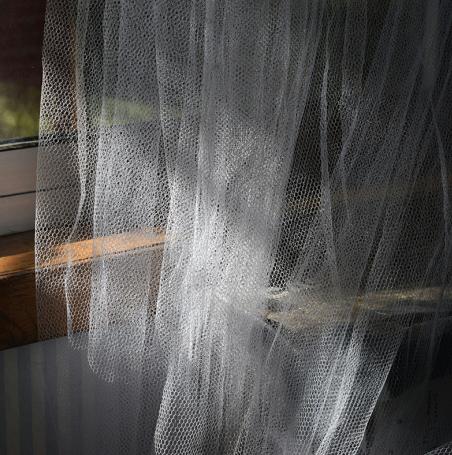
Quality definitions in mosquito netting tend to be quantitative. In UNICEF supply specifications for a polyester LLIN, the fabric is specified as “warp knitted” (construction referenced to ISO 8388) and the netting mesh size is set at a minimum of 24 holes/cm², alongside other physical parameters (for example, bursting strength and dimensional stability).
Mesh size is also tied to standardized test practice. In a 2024 implementation guidance document for WHO prequalification of vector control products, WHO explains that mesh size can be determined by counting the number of holes in a defined square area of netting and converting the result to holes/cm². The same guidance notes that, before counting, netting should be conditioned according to ISO 139 (20°C, 65% relative humidity for 4 hours) and warns against stretching or distorting the fabric during measurement.
Durability language is similarly formalized. WHO’s 2013 guidance note on estimating LLIN longevity recommends the proportionate Hole Index (pHI) as a measure of physical integrity, with practical cut-offs that classify nets as “good” (pHI 0–64), “acceptable” (65–642), or “torn” (643+).
These three reference points—warp-knitted construction, measurable mesh, and quantified integrity—shape what a factory must deliver: a process that holds spec repeatedly, not a process that relies on end-of-line correction.
Why Two-Guide-Bar Tricot Is a Practical Choice for Netting
Warp knitting is closely associated with openwork structures, including nets. A technical primer on warp knitting (CIFRA) lists mosquito nets among applications for lace and net fabrics and highlights warp knitting as well suited to producing net structures in continuous lengths.
The “two-bar” advantage is about control. The same primer notes that tricot machines may have up to four guide bars, and that using two sets of yarn requires two or more guide bars—an arrangement that increases design freedom and structural control compared with single-yarn constructions.
In mosquito net production, that translates into steadier yarn paths and less variation in hole formation. A Tricot 2 bars Machine for Mosquito Nets should therefore be judged by how consistently it forms the intended mesh across the entire working width, not only by its advertised output speed.
The Controls That Separate Saleable Rolls From Scrap
In netting, defects are often “quiet”: a small tension drift can create streaks, weak lines, or subtle mesh inconsistency that is only caught after significant yardage is produced. That is why the most important question is whether the machine actively stabilizes the process.
Industry descriptions of tricot platforms emphasize three linked controls. First, electronically controlled yarn let-off supports steady feeding of ends into the knitting zone. Second, electronically controlled take-up—often implemented as a multi-roller system—helps regulate fabric handling after stitch formation. Third, integrated monitoring systems (notably Laserstop-type fault detection and camera-based fabric monitoring) enable early stops and faster correction when faults appear.
When these controls are engineered into the platform, factories typically see fewer rejected lots and less rework because problems are prevented or stopped earlier. In other words, process control becomes a direct lever on margin.
A Production-Ready Platform From Grand Star Technology
Grand Star Technology’s published specifications for its HKS2 Tricot Warp Knitting Machine with 2 bars list working widths up to 8636 mm (340″), with additional configurations at 8128 mm (320″) and 7417 mm (292″). This is the kind of width range many producers need when planning large tenders or scaling output without multiplying floor space and staffing.
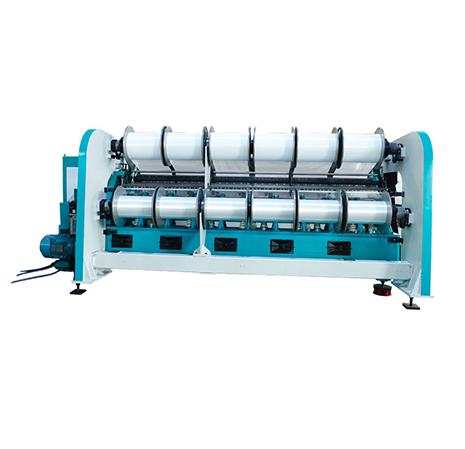
The same technical description lists gauge options E28 and E32, allowing producers to tune net construction within a consistent equipment family. On the knitting side, it highlights compound needles and a sinker system intended to support precision and stable tension. It also describes carbon-fiber-reinforced guide bars to reduce weight while maintaining durability—an approach typically used to improve stability in high-speed bar motion.
For daily usability, the machine includes the GrandStar® Command System for configuration, control, and monitoring, plus integrated Laserstop fault detection and an integrated camera to reduce defect propagation during continuous running.
A QA Loop That Aligns With How Nets Are Evaluated
To keep a Tricot 2 bars Machine for Mosquito Nets producing within spec, QA has to be lightweight enough to run every shift. One practical anchor is mesh measurement: WHO guidance emphasizes counting holes in a defined square area, avoiding stretch/distortion during counting, and conditioning netting before measurement under ISO 139 conditions to reduce variability.
A second anchor is integrity language. WHO’s pHI approach gives factories an external reference for why holes matter and how “serviceability” is categorized, which helps link process decisions to durability expectations in the real world.
In practice, a scalable routine is simple: verify mesh early in the shift, confirm let-off and take-up settings after beam changes, use monitoring alarms to stop faults quickly, and log recurring issues by yarn lot and setup conditions so corrective actions become repeatable.
Reliable Protection Starts With Repeatable Control
A Tricot 2 bars Machine for Mosquito Nets earns its place when it repeatedly delivers what buyers can measure: warp-knitted construction, consistent mesh in holes/cm², and process stability that protects physical integrity over time.
With clear target specs (mesh requirement, yarn type, and output goals), Fujian Grand Star Technology Co., Ltd. can propose a configuration and monitoring approach designed to keep production stable from the first run—so “quality” is built into the process, not chased after the roll is finished.

Hey, I’m Vincent!
Solving complex challenges with precision and creativity in the warp knitting industry. Passionate about advancing textile engineering and turning innovative ideas into reality. Shaping the future of warp knitting.


