



Tricot Machine for Automotive Textiles: Advanced Needle System and 3-Bar Pattern Flexibility

Tricot Machines used for automotive textiles are subject to speedy praises. But, as we know, speed can sacrifice quality. The demands of modern automotive interiors place an importance on texture and consistency.
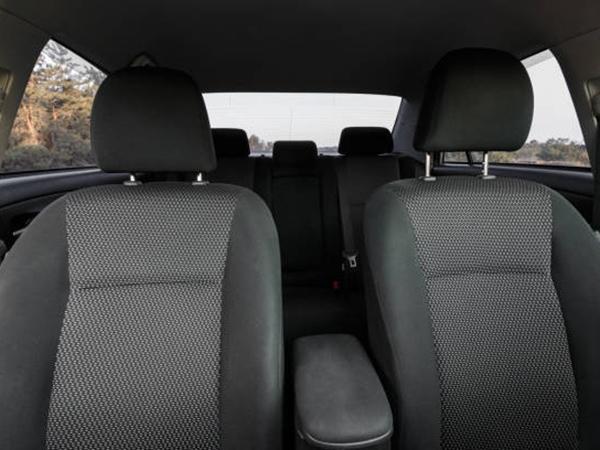
Grand Star Technology optimizes their machines with an advanced needle system and up to 3-bar pattern flexibility for better stitch and design control. But, as previously stated, the best mechanics are just as good as the management of proper tension. Beyond costly rejects, what separates reliable output? There is an unexpected answer to this common question. The focus is on the lesser-known components of the production process! Keep reading to learn how careful management of mechanics can help achieve optimal heights for the production of fabric.
The 3-Bar Advantage: Why Two Bars Are No Longer Enough
In automotive warp knitting, guide bars control yarn movement, and yarn movement controls fabric formation. With three guide bars, you can build more functional textile structures than basic two-bar designs while keeping setup manageable. For automotive applications—seat covers, door trims, headliners, and laminated composites—this balance matters immensely. A 3-bar tricot structure delivers pattern options without over-engineering, supporting everything from smooth headliner materials to textured seat cover fabrics.
- Three bars enable one bar to anchor the base structure, another to add lapping variation, and the third to enrich the surface with contrast or openness.
- Due to the way stability and continuity interlace with Shogging’s stacking and layering process, one can create waves, micro-ribs and mock-jacquard textures.
- Extended sinker movement enables a wider range of fabric structures, expanding design possibilities for automotive interiors.
Advanced Needle System: Where Stitch Control Becomes Cost Control
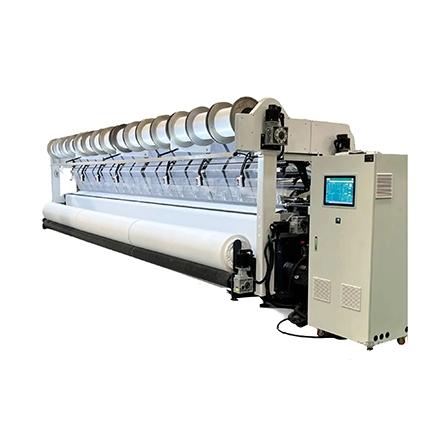
Needles do not just form loops. Needle design affects loop stability, fabric hand feel, and how well the fabric holds shape during finishing. Grand Star uses an advanced needle bar arrangement with compound needles to support stable fabric formation and precise stitch control. For automotive textile producers, this is not a technical footnote—it is a direct line to lower defect rates and less rework.
- More consistent texture across large lots supports reliable lamination and downstream process stability.
- Cleaner fabric formation reduces “surprise defects” discovered after finishing.
- Better process repeatability ensures approved samples can be matched reliably over time.
Compound needles reduce yarn stress and place the loop accurately on the needle hook and closing element. The result is even stitches, stable lapping geometry, and a fabric that looks right under showroom lighting and feels right in the hand.
Guide Bar Shogging: Precision Movement for Controlled Surface Texture
Shogging is the controlled lateral movement of guide bars across the needle bed. When you change the shog distance, timing, and sequence, you change the fabric surface. With three guide bars, short shogs create tight, subtle textures, while longer shogs form bolder relief. The interplay between bars controls surface roughness and pattern clarity, giving automotive textile manufacturers the precision they need for both aesthetic and functional requirements.
- Surface roughness control supports adhesion targets in laminated automotive composites.
- Pattern options for different structures—from smooth headliners to textured velour for seat covers.
- Balanced production stability for long runs and repeat orders.
Tension Systems That Eliminate Fabric Contour Defects
Fabric contour defects ruin downstream processes. Electronic control of fabric take-up delivers tension management across the entire manufacturing process. The yarn let-off device is variable with each warp beam, keeping yarn tension accurate across the knitting cycle. When take-up and let-off work together, the fabric does not warp or ripple, GSM stays consistent across width and length, and tension-related faults over long campaigns are sharply reduced.
- Precision tension across the full width eliminates distorting factors when it comes to lamination or cutting.
- Lower cost per finished meter.
- We guarantee that every output roll corresponds to the specifications.
Modern automotive textile production has visibility and control. The GrandStar® COMMAND SYSTEM combines a user-friendly operator interface with machinable and controllable electronics. Incorporated Laserstop and camera systems safeguard knitting’s critical zones. As a result, problems are identified and corrected instantaneously. The continuous improvement of real-time quality monitoring makes sure that losses multiply.
- User-friendly HMI lowers both training times and operator mistakes.
- Defect timing control corrects problems in real-time.
- Lower rejection rates result in margin and schedule improvements.
Take Control of Operating Costs
Tricot Machine per Automotive Textiles uses a performanced speed system drive. Sustainability laws and green supply chain requirements mean manufacturers must adopt energy performance automated systems. Through a state-of-the-art drive system, the machine is able to operate quickly without compromise, resulting in a win-win situation for the manufacturer and the environment.
- Production is Extended Thanks to Global Support
Grand Star Technology’s training and installation, complemented by comprehensive manuals and onsite service teams in Turkey, Vietnam, India, Indonesia, and the USA, illustrate how a machine is only as good as the support behind it. For zones without teams, the first tier of support is real-time online assistance, followed up by engineer on-site support if required.
- Grand Star Technology for 2026 and On
By 2032, the global tricot warp knitting machine industry is expected to be worth $780.20 million, with a CAGR of 6.4%. Simultaneously, the automotive industry demand is rapidly evolving towards lightweight, recycled, and composite materials. Companies beginning today to fund advanced flexible and precision technology will harvest tomorrow’s marketst. For the past 15 years, Grand Star Technology has led the way with warp knitting technology and offers machines to today’s industry challenges.
Grand Star Technology’s advanced needle system and 3-bar pattern flexibility resources transform the automotive textile manufacturing process. Reach out to us to learn more.
Frequently Asked Questions (FAQ)
Q: What products are able to be produced on a 3-bar tricot machine?
A: Headliners, door trims, parcel shelves, laminated composites, seat covers, and partition lamination.
Q: How does the advanced needle system decrease defects?
A: The combination of precision bar placement and a compound needle ensures even stitches, along with even lapping and a reduction in the need for material waste on rework.
Q: How simple is the GrandStar® COMMAND SYSTEM for current operators?
A: The intuitive HMI shortens the training period, and on-site and/or remote trainings are available to support further learning.
Q: What is available for support outside of China?
A: Complete local service teams in Turkey, India, Vietnam, Indonesia and the USA as well as dispatchable engineers and, support via online, real-time assistance.
Q: Is the machine suitable for processing recycled or sustainable yarns?
A: Definitely. The adjustable let-off and tension control systems operate seamlessly with recycled and bio-based yarns, and standard fibers.

Hey, I’m Vincent!
Solving complex challenges with precision and creativity in the warp knitting industry. Passionate about advancing textile engineering and turning innovative ideas into reality. Shaping the future of warp knitting.


