



Raschel Knitting Machine Configurations: A Spec-Led Selection Guide

A raschel knitting machine is fixed by four numbers long before anything else on the quotation matters: working width, gauge, how many guide bars it carries, and how many warp beam positions sit behind it. This page puts those four numbers side by side across the raschel platforms we build, so you can shortlist on specification rather than on description.
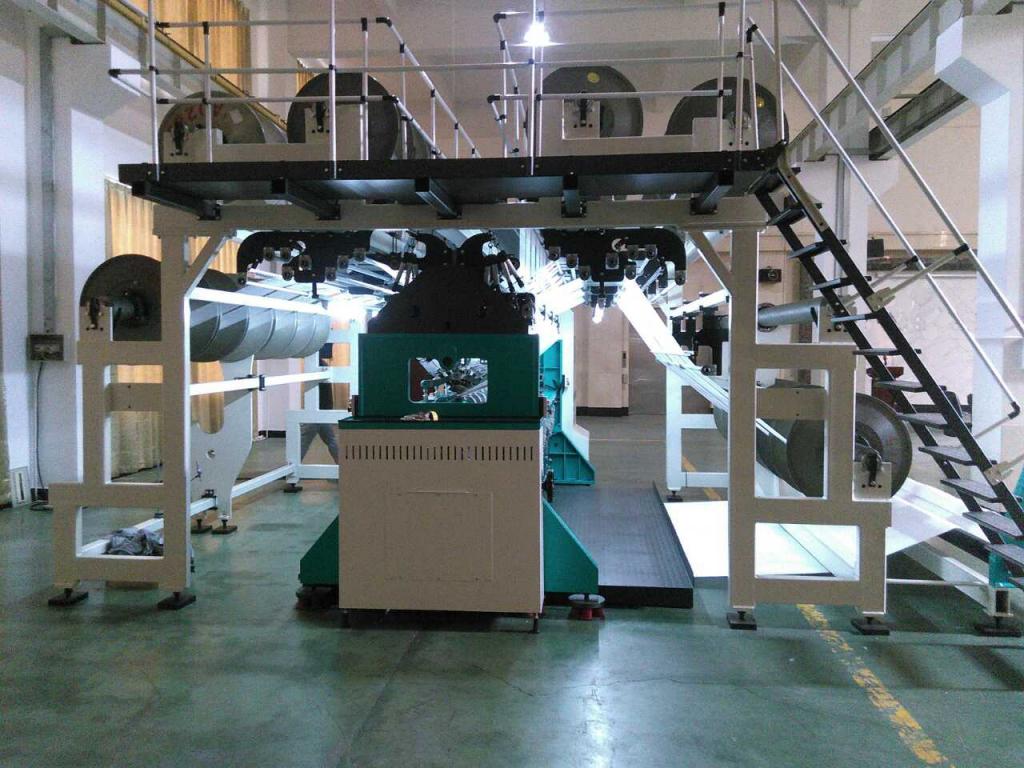
The four numbers that fix a raschel machine
Working width caps the fabric you can sell off the machine. Gauge sets how dense the loop structure can be. Guide bar count sets how much pattern you can build. Beam positions and flange diameter set how long you run before the machine stops for a beam change.
Everything else – controls, monitoring, drives – improves how well you hit those four, but it cannot move them. A machine quoted at 3454 mm will not make a 5 m net, whatever the control system does.
Five raschel platforms, compared on published specifications
| Platform | Working width | Gauge | Guide bar and needle bar setup | Beams |
|---|---|---|---|---|
| Raschel machine for elastic and 3D spacer fabric | Up to 8636 mm (340 in) | E28, E32 | Four ground guide bars; individual needle and tongue bars; stitch comb bar and knockover comb bar | Three positions standard for sectional beams with 32 in flange; optional four positions for 21 in or 30 in flange |
| Double Raschel platform | 3505 mm (138 in), 5334 mm (210 in) or 7112 mm (280 in) | E18, E22, E24 | Two needle bars with latch needle units; two knock-over comb bars; two movable stitch comb bars; knock-over comb bar distance adjustable 2-12 mm on a central trick plate; seven bars available for spacer work | Electronically controlled yarn let-off; take-up by geared motor with four rollers |
| Double Jacquard warp knitting machine | 3454 mm (136 in) | E18, E22, E24, E28 | Six ground guide bars; piezo-jacquard guide bar with split execution; dual latch needle bars; knock-over comb bar 2-12 mm on a central trick plate | Six 812 mm warp beams, free-standing frame |
| Double Jacquard Raschel RJPC 4/2F | 4318 mm (170 in) | E18, E24 | Electronic control over both ground and jacquard guide bars | Three electronically controlled let-off devices for the ground guide bars |
| Raschel Jacquard RJPC 4F | 6300 mm (248 in) | E18, E24 | Pattern Device EL with fully electronic guide bar control for ground and jacquard bars | Three electronically controlled let-off units with multi-speed control; custom creel built for jacquard feeding |
Read the table by column, not by row. If your fabric needs E28 or finer, three of the five platforms drop out immediately. If you sell 3 m wide goods, the 8636 mm machine is capacity you will pay to own and never use.
Guide bar drives are where pattern capability actually lives
Bar count alone is a weak signal. What the bars can do matters more.
On the Double Raschel platform the EN-drive powers seven electronic guide bar drives, and an optional EL-drive extends guide bar shog distance up to 150 mm. The Double Jacquard machine uses the same 150 mm figure for its electronic guide bar drive. That shog distance is the practical ceiling on how far a lapping can travel, which is what decides whether an advanced pattern or a spacer channel is reachable at all.
The knock-over comb bar distance, adjustable between 2 mm and 12 mm on a central trick plate, is the other number to ask about. It is what you move when you are chasing a thickness target on spacer fabric, and it is the setting most often left at whatever the commissioning engineer used.

The site requirements buyers check last and should check first
The RJPC 4F specification sheet is unusually explicit about the room the machine goes into, and those figures are worth copying into your own site survey before any order is signed.
It lists a speed-regulated drive with a 7.5 kW total load and a 380 V three-phase supply with a 10 percent tolerance. Working conditions are given as 25 degrees C with a 3 degree band, 65 percent humidity with a 10 percent band, and floor pressure of 2000 to 4000 kg per square metre.
Floor loading is the one that catches people. A mezzanine or a thin slab that was fine for a weft knitting line is not automatically fine for a 6300 mm raschel machine, and finding out after the crate lands is expensive. Batching on that platform winds to a maximum diameter of 685 mm (27 in), which also sets how much clear floor you need at the take-up end for roll handling.
Which raschel machine, given what you sell
If you sell 3D spacer, elastic mesh or cushioned structures for sports, automotive interiors or medical use, then the elastic and spacer platform is the fit: four ground guide bars, individual needle and tongue bars, E28 or E32, and a working width you scale to your finishing line. Our elastic raschel machine page covers that configuration.
If you sell pile, plush, tubular goods or spacer with tuned compression, then the double needle bar route applies, with seven bars available for spacer and a 2-12 mm knock-over comb bar window to hit thickness.
If you sell patterned jacquard goods – curtains, bed linen, upholstery, lace-effect apparel panels – then the jacquard platforms apply, and the deciding numbers become gauge (E18 or E24 on RJPC machines, up to E28 on the double jacquard machine) and working width.
This conclusion does not hold in two cases. If your customer has already fixed a pattern that needs a shog beyond the drive range you are quoted, the drive decides before the class does. And if you are extending an existing line, the beams and creels already on your floor can outweigh the whole comparison – beam flange diameter in particular is not something you want to run in two sizes.
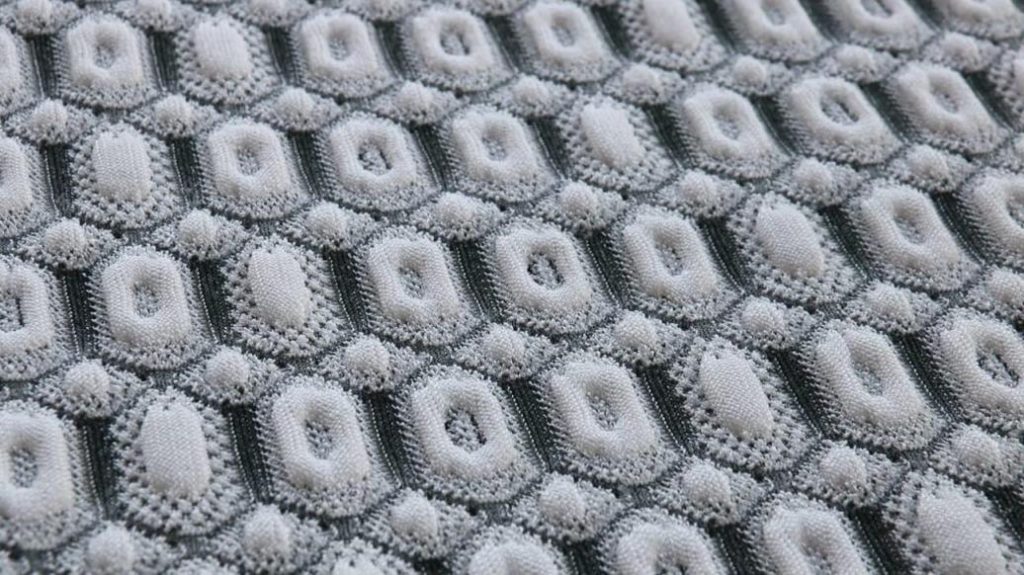
Control, monitoring and what happens after delivery
Across these platforms the operator interface is the GrandStar Command System, which handles recipe setup, guide bar coordination, yarn let-off speeds, pattern sequence and production diagnostics from one console. Quality monitoring combines Laserstop technology with a high definition camera unit, so a fault is caught and traceable rather than discovered at inspection.
Take-up on the jacquard platforms uses four rollers with black grip tape driven by a geared motor, which is a detail that shows up later as even roll build and fewer edge problems in dyeing and coating.
Machines are CE certified and carry a one-year warranty. After-sales teams are on the ground in Turkey, India, Vietnam, Indonesia and the United States, and engineers run regular visits every one to two months to keep settings aligned as yarn lots and product mixes shift. Consumable elements and replacement parts for these lines are listed on the group warp knitting spare parts pages.
What to settle before you request a quotation
Send the finished fabric width you actually sell, the structure or a sample, your target gauge, the pattern shog you need, your floor loading in kg per square metre, and your supply voltage. Those six items narrow five platforms to one or two in a single exchange, and they are all things you already know.
Frequently Asked Questions
What working widths are available on a raschel knitting machine?
Across our raschel platforms the published widths run from 3454 mm (136 in) on the double jacquard machine, through 3505 mm (138 in), 4318 mm (170 in), 5334 mm (210 in), 6300 mm (248 in) and 7112 mm (280 in), up to 8636 mm (340 in) on the elastic and 3D spacer machine. Choose against the finished width you sell, not the widest number on offer.
What gauge should I order for spacer or jacquard fabric?
The elastic and 3D spacer platform is listed at E28 and E32. The double raschel platform is listed at E18, E22 and E24. The double jacquard machine covers E18, E22, E24 and E28, while the RJPC jacquard machines are listed at E18 and E24. Match the gauge to the fabric density you already sell and confirm the figure in writing before comparing quotations.
How far can the guide bars move on these machines?
The optional EL-drive on the double raschel platform extends guide bar shog distance up to 150 mm, and the double jacquard machine quotes the same 150 mm figure for its electronic guide bar drive. That distance is the practical limit on how far a lapping can travel, so it decides whether an advanced pattern or a spacer channel is reachable at all.
What floor and power requirements should I plan for?
The RJPC 4F sheet gives a speed-regulated drive with 7.5 kW total load on a 380 V three-phase supply with a 10 percent tolerance, working conditions of 25 degrees C with a 3 degree band and 65 percent humidity with a 10 percent band, and floor pressure of 2000 to 4000 kg per square metre. Check floor loading before the machine ships, not after.
What support comes with the machine after installation?
Installation and training are delivered through manuals, online video guidance and on-site sessions. After-sales teams operate locally in Turkey, India, Vietnam, Indonesia and the United States, with engineers running regular visits every one to two months. Machines are CE certified and carry a one-year warranty.

Hey, I’m Vincent!
Solving complex challenges with precision and creativity in the warp knitting industry. Passionate about advancing textile engineering and turning innovative ideas into reality. Shaping the future of warp knitting.


