



Wholesale Terry Warp Knitting Machine: A Volume Buyer’s Checklist

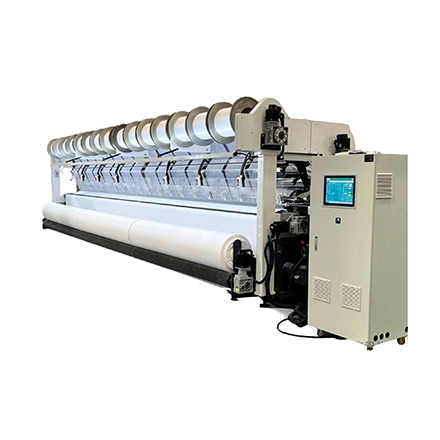
A wholesale terry warp knitting machine is a terry-fabric warp knitter bought in volume for towel, robe and cleaning-cloth production. When you are ordering several machines at once, the decision rests on four systems: the needle and loop-forming setup, the guide bars, let-off and take-up control, and fault monitoring. Price per unit matters less than whether every machine in the batch builds the same loop.
Terry cloth has to be soft, thick and absorbent, and warp knitting reaches it by a different route from weaving: yarn goes in from beams rather than being interlaced, which is why buyers look at it for high-volume orders. This page is a checklist for that purchase, written from the machine side.
What decides loop quality on a terry warp knitting machine
Needle bar and compound needles
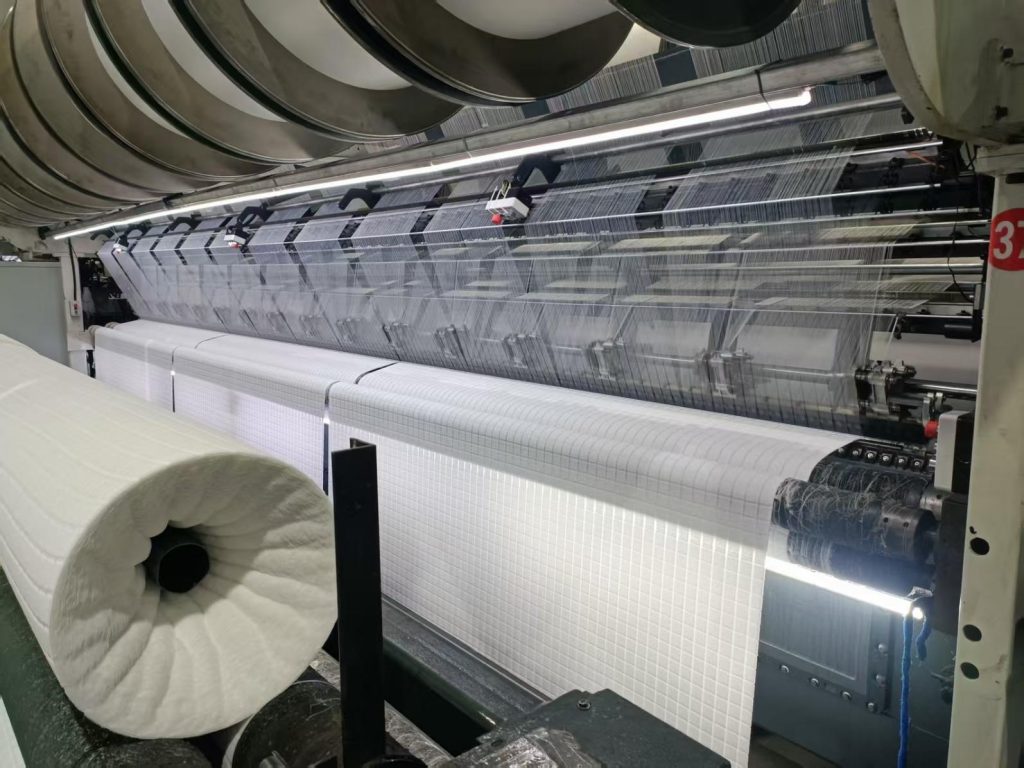
The loop is formed by compound needles carried on a needle bar. On the machines covered here the needle setup is what lets you control loop depth, which in turn decides how thick and how textured the terry surface comes out. For the needle system in more detail, our tricot knitting machine page covers the same compound-needle principle.
When you buy several machines, ask whether loop depth is set identically across the batch from the control panel or adjusted per machine by hand. The first gives you one fabric from ten machines; the second gives you ten fabrics.
Guide bars and shogging
Terry machines carry several guide bars, and each bar moves the yarn sideways (shogs) over short or long distances to lay it around the needles. The shogging pattern is what changes the fabric style, from a softer to a rougher surface. If your product range includes more than one terry article, confirm how patterns are changed and stored, because that is where changeover time goes.
Let-off and take-up
Take-up is electronically controlled for speed and tension, holding the fabric tight without stretching it. Let-off works per warp beam and adjusts yarn feed section by section so tension stays equal. Uneven let-off is what produces loose and tight bands running along the fabric, and it is the first system to question when one machine in a batch makes a different towel from its neighbours.
Monitoring and control
These machines use laser and camera systems to watch the fabric while it runs and stop the machine when a fault is detected, so a defect does not run on for metres. Control sits in the GrandStar® COMMAND SYSTEM touchscreen, where settings are changed on the panel.
For a volume buyer the practical question is not whether monitoring exists but what happens after a stop: does the screen say which position triggered it, and can an operator on a night shift clear it without an engineer? Ask to see the fault screen, not the brochure.
The drive is speed-controlled, which is where the power saving comes from. Modular design means parts are reachable and upgrades can be added later rather than replacing the machine.
A checklist before ordering in volume
| System | What to ask | Why it matters on a batch order |
|---|---|---|
| Needles and loop depth | Is loop depth set from the control panel and copied between machines? | Same towel weight and hand across all machines |
| Guide bars | How many bars, and how are shogging patterns stored and loaded? | Changeover time between terry articles |
| Let-off | Is let-off controlled per warp beam? | Prevents lengthwise loose and tight bands |
| Take-up | Is take-up electronic, and is tension shown on screen? | Fabric held tight without stretch |
| Monitoring | Laser and camera coverage, and what the fault screen reports | Stops defects before they run on |
| Spare parts | Which parts are modular and stocked for the batch | Downtime when one of several machines needs a part |
If you are equipping a line for one towel article at high volume, then put let-off control and monitoring at the top of the list, because consistency across machines is what you are paying for. If you are running several terry articles on the same machines, then guide bar configuration and pattern changeover move to the top. This does not apply if you are buying a single machine for sampling or development work: there, flexibility of the needle and guide bar setup outweighs batch consistency.
Support after installation
Grand Star Technology was founded in 2012 in Fujian, China, and works with customers in the USA, Japan, Turkey, Vietnam, Indonesia, India, Colombia and Mexico. Each machine ships with manuals, with videos and online help alongside. Local teams support customers in Turkey, India, Vietnam, Indonesia and the USA, and engineers travel to site when hands-on work is needed.
On a batch order, agree in writing which of these applies to your country before the machines ship. A support route that works for one machine can be stretched thin when ten are commissioned in the same month.
For the wider parts picture around a terry line, see warp knitting machine parts explained. For commercial terms on a volume order, our sales organisation handles enquiries at grandstarcn.com. If you want to go through the technical checklist first, send us your towel articles and target daily output through our contact page.
Frequently Asked Questions
What should I check before buying terry warp knitting machines in bulk?
Check that loop depth is set from the control panel and can be copied between machines, how guide bar patterns are stored, whether let-off is controlled per warp beam, and what the laser and camera monitoring reports when it stops the machine.
What fabric does a terry warp knitting machine make?
Terry fabric for towels, robes and cleaning cloths, where the fabric needs to be soft, thick and absorbent.
Why do towels from different machines in the same batch come out different?
Uneven let-off or loop depth set differently per machine. Let-off should work per warp beam to keep tension equal, and loop depth should be set identically across the batch.
Does the machine stop automatically when there is a fabric fault?
Yes. Laser and camera systems watch the fabric during the run and stop the machine when a problem is detected, which limits waste.

Hey, I’m Vincent!
Solving complex challenges with precision and creativity in the warp knitting industry. Passionate about advancing textile engineering and turning innovative ideas into reality. Shaping the future of warp knitting.


