



Multi Axial Warp Knitting Machine: Specs, Layout and Setup

A multi axial warp knitting machine lays yarn at set orientations and stitches the layers together in one pass, so the reinforcement leaves the machine already stacked instead of being built up by hand. This page gives the configuration we actually ship: two working widths, E7 gauge, the full bar set, servo weft insertion and chopper, and the installation conditions the line needs before the first roll.
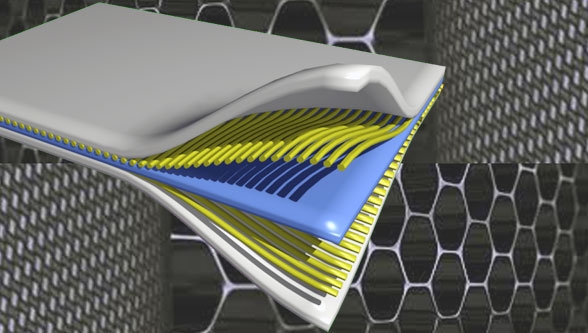
What the machine does for a composite layup
The value is in the fibre orientation. Yarn can be placed at the orientations a composite part needs, typically 0°, plus and minus 45° and 90°, and bound in a single continuous process rather than assembled layer by layer. For wind blade shells, aerospace panels, marine skins and automotive parts, that means the stress profile of the part is decided at the fabric stage, and the layup crew works with a stable, drapable reinforcement instead of loose plies.
The chopper device on the machine builds chopped layers in line, which is the same job a dedicated chopped strand mat machine does as a standalone. Where the programme is carbon rather than glass, the same platform is configured as a carbon fibre multi axial machine; the glass version is listed as the glass fibre multi axial machine. Same control philosophy, same bar set, different yarn handling expectations.
Machine specification at a glance
| Item | Specification |
|---|---|
| Working widths | 2565 mm (101″) and 4496 mm (177″) |
| Gauge | E7 |
| Knitting elements | Compound needle bar, closing wire bar, knock-over sinker bar, supporting bar, counter retaining bar, 2 ground guide bars |
| Pattern drive | N-drive with pattern disc, integrated tempi change gear drive, 1 pattern disk |
| Warp beam support | 2 positions for sectional use, max flange Ø30 |
| Yarn let-off | Electronically controlled, geared motor with frequency converter |
| Yarn stop motion | Electronically controlled, optional |
| Weft insertion | Servo controlled |
| Chopper device | Servo controlled, one unit per machine |
| Fabric take-up | Electronically controlled, geared motor with frequency converter |
| Batching | Standalone, friction drive with pressure roller, max batch Ø914 mm (36″), synchronised to stitch courses |
| Main motor | 13 kW for 2000–4400 mm widths; 18 kW for 4400–6000 mm widths |
Two standard widths rather than a continuous range is a deliberate choice. It keeps spare parts, training and slit-to-width planning common between a development machine and a volume machine, which matters more to a plant manager than a bespoke width does.
Control, drives and what the operator sees
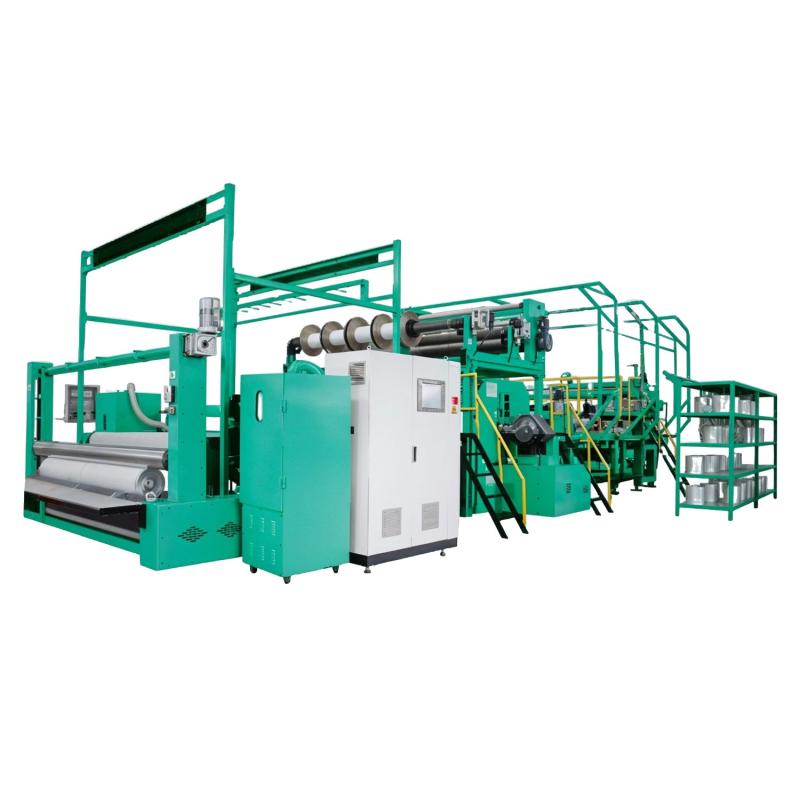
A machine control computer coordinates the main drive, yarn feeding and fabric take-up, and the operator works from a touch screen in the switch cabinet with live production data on it. The electrical system is speed regulated and power-failure safe, with inching motion for threading and inspection, and a single speed control for the core functions implemented through frequency converters.
Two points are worth flagging to whoever will maintain the line. Immersion lubrication in the crankcase with filtration is what carries the machine through long campaigns, so the filtration interval belongs on the maintenance card rather than in a drawer. And the electronic yarn stop motion is an option, not standard fitting; on sensitive tows it is the difference between a stopped machine and a metre of scrap, so decide on it at order stage rather than after commissioning.
Installation conditions to settle before delivery
Composite reinforcement lines are sensitive to their surroundings, and the specification assumes a controlled room. The recommended operating environment is 25 °C (±2 °C) at 65% relative humidity, in a clean, low-draft space protected from dust and fibre fly. Floor load runs 2000–4500 kg/m² depending on machine type and length, and operational vibration has to be accounted for at the foundation stage rather than after the machine is bolted down.
If you are re-equipping an existing hall, take those three numbers to your civil contractor before you take the machine drawing to your layout planner. Floor load and vibration are the items that turn into schedule delays; air conditioning and dust control are the items that turn into quality complaints six months later.
Training and service coverage
Installation and training run through professional manuals, online guidance, a video library and on-site sessions built around the product mix on the line. We keep local service teams in Turkey, India, Vietnam, Indonesia and the USA. Where there is no local team, support starts as real-time online assistance and, if the fault needs hands on it, engineers are dispatched from the nearest hub. Proactive visits every one to two months are part of the programme, and they exist mainly to catch drift in tension and pattern settings before it shows up as off-spec fabric.
To size a machine for a specific part, three answers move the conversation fastest: the reinforcement width you need at the mould, the fibre and areal weight per layer, and whether you need chopped layers in line. Machine-level enquiries and the wider Grand Star range are handled at grandstarcn.com; for a technical review of a layup you already run, send the layer schedule through our contact page and we will come back on width, gauge and chopper configuration. Related knitting elements are listed under warp knitting machine parts.
Frequently Asked Questions
What working widths does the multi axial warp knitting machine come in?
Two standard formats: 2565 mm (101 inches) and 4496 mm (177 inches). Keeping to two widths means a development machine and a volume machine share spare parts, operator training and slit-to-width planning.
What gauge and knitting elements does the machine use?
E7 gauge, with a compound needle bar, closing wire bar, knock-over sinker bar, supporting bar, counter retaining bar and two ground guide bars. Patterning is handled by an N-drive with pattern disc and an integrated tempi change gear drive using one pattern disk.
How much power does the machine need?
The main motor is sized by width: 13 kW for 2000 to 4400 mm and 18 kW for 4400 to 6000 mm. Drives are speed regulated and power-failure safe, with a single speed control for core functions through frequency converters and inching motion for safe threading.
What installation conditions should we prepare for?
A controlled room at 25 degrees C plus or minus 2, 65% relative humidity, low draft, and protection from dust and fibre fly. Floor load is 2000 to 4500 kg per square metre depending on machine type and length, and operational vibration should be handled at the foundation stage.
Do you provide installation and after-sales service?
Yes. Installation and training are delivered through manuals, online guidance, a video library and on-site sessions. Local service teams cover Turkey, India, Vietnam, Indonesia and the USA; elsewhere support starts online and engineers are dispatched from the nearest hub when hands-on work is needed.

Hey, I’m Vincent!
Solving complex challenges with precision and creativity in the warp knitting industry. Passionate about advancing textile engineering and turning innovative ideas into reality. Shaping the future of warp knitting.


