



Raschel Bag Machine Setup: Beams, Guide Bars and Mesh for Produce

A raschel bag machine is bought for one property that woven and film packaging cannot match: an open knitted structure that carries weight while letting air through. Everything in the machine specification serves that – the guide bar setup that builds the mesh, the beam configuration that keeps it running, and the monitoring that stops a fault becoming a roll of unusable netting.
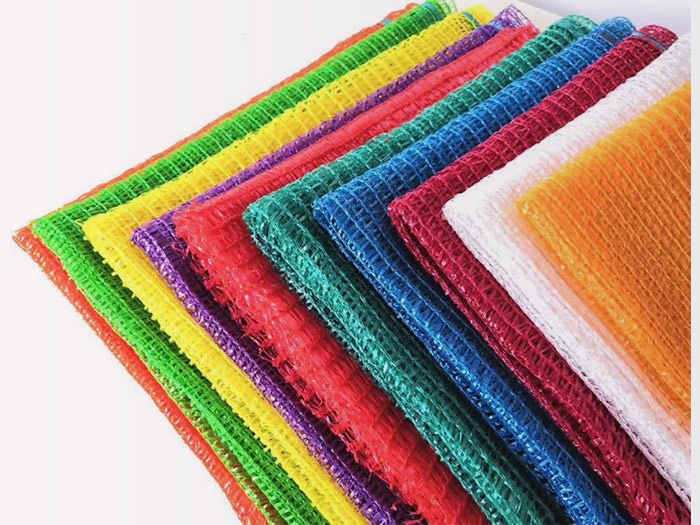
What the machine has to get right
Mesh bags fail in predictable ways: the structure stretches out of shape under load, the aperture closes so produce cannot breathe, or an edge unravels in handling. All three are set at the knitting stage, not in converting.
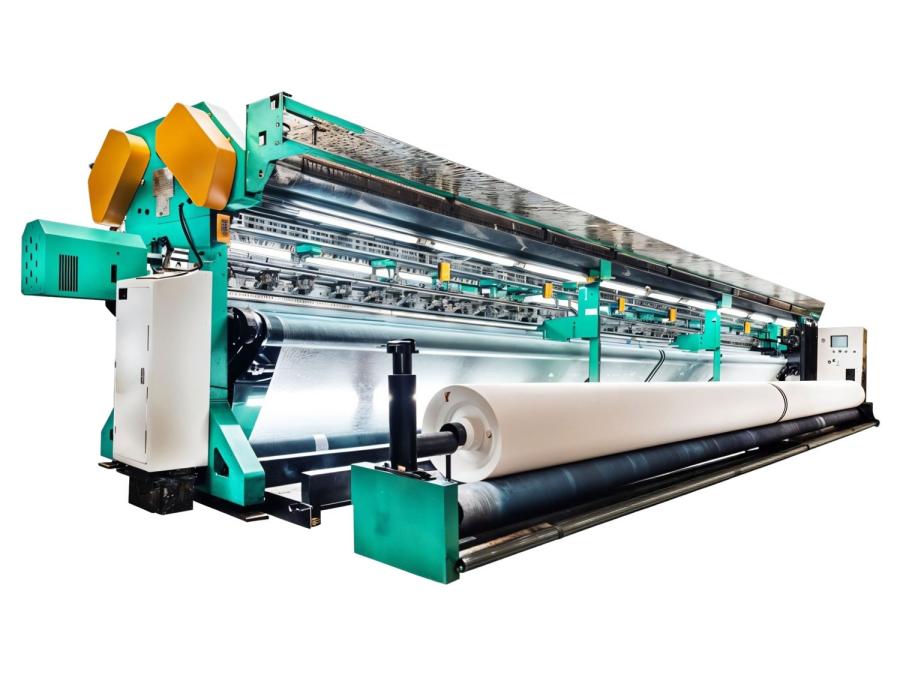
The knitting elements are what hold the structure. An individual needle bar and tongue bar give the control needed for fine, detailed fabric and are what let you tune strength and flexibility together rather than trading one for the other. A stitch comb bar and a knockover comb bar keep formation even, so the material stays stable through the run and holds its shape afterwards.
Four ground guide bars set how much pattern freedom you have. For bag work that translates directly into aperture geometry and mesh variation – the difference between one product and a range.
Beam configuration decides your run length
Bag production is high volume and low margin, so the number that matters day to day is how long you run before stopping.
| Configuration | Beam positions | Sectional beam flange |
|---|---|---|
| Standard | Three | 32 in |
| Optional | Four | 21 in |
| Optional | Four | 30 in |
The 32 in standard setup carries more yarn per beam and suits long uniform runs of a single bag spec. The four-position options trade beam size for feed flexibility, which is the better fit when you switch between mesh types often. Choosing the flange diameter is a decision you make once for the whole plant – running two flange sizes means two sets of handling equipment and two spares lists.
The full machine specification behind this configuration is set out on our raschel warp knitting machine page, and the elastic variant is covered on the Raschel Machine for Elastic Fabric RSE 4 page.
Control and monitoring on a high-volume line
The GrandStar Command System is the operator interface: setup and adjustment through simple commands rather than machine-specific procedure. On a bag line that matters mostly at changeover, which happens more often than on a fabric line because bag specifications are short-lived.
Monitoring is where the real saving sits. Laserstop technology halts the machine on a detected fault, and an integrated camera checks fabric quality in real time. In netting production a fault that runs unnoticed does not produce seconds – it produces a full roll that cannot be converted into bags at all, because a single dropped course runs the length of the piece.
Who buys the fabric, and what each one needs from it
| Sector | What the bag has to do |
|---|---|
| Agriculture | Store fruit, vegetables and potatoes with airflow through the bag so produce stays fresh longer; strong enough to protect during transport, light enough to keep freight cost down, and stackable without damage |
| Retail and supermarkets | Light and strong for fresh produce, open structure to prevent moisture build-up, and visibility of the product inside; reusable rather than single-trip |
| Logistics and industrial | Breathable, strong and lightweight for moving and storing raw materials; the open design reduces condensation, which keeps stored material dry in a warehouse |
The common thread is airflow. Condensation is what spoils produce and degrades stored material, and an open knitted structure manages it passively with no coating, no perforation step and no additional cost per bag.
Is this the right machine for you
If you produce mesh packaging in volume for agriculture, retail produce or industrial storage, and your specifications change a few times a season rather than weekly, then this configuration fits: four ground guide bars for aperture range, three beam positions on 32 in flanges for run length, and Laserstop monitoring to protect the yield.
This does not apply if your product is closed woven sacking or coated film packaging – those are different processes, not a different setting on this machine. It also does not apply if you need fine apparel-grade fabric, where the bag machine configuration is the wrong element set entirely.
What comes with the machine
Grand Star Technology has built warp knitting machines since 2012, with a focus on efficiency, productivity and sustainability – machines built to run long, produce more per shift and use less material and energy doing it.
Training is delivered in several formats: manuals, online guides, video, and on-site sessions, so operators reach competence without depending on one commissioning visit. After-sales teams operate in Turkey, India, Vietnam, Indonesia and the USA, with more regions planned, handling maintenance and machine upgrades locally so a fault does not wait on international travel. Replacement elements and consumables for the line are listed on the group warp knitting spare parts pages.
If you are scoping a line, send your bag dimensions, target mesh aperture, yarn type and monthly volume. Those four figures are what decide beam configuration and working width, and they turn a general enquiry into a specific quotation in one exchange.
Frequently Asked Questions
What makes a raschel bag machine different from other packaging equipment?
It knits an open structure that carries weight while letting air through, using warp knitting to form durable fabric that holds heavy items. That combination of load capacity and airflow is what woven sacking and film packaging cannot provide, and it is why produce and industrial storage users specify knitted mesh.
How many warp beam positions should I order?
The standard configuration has three positions for sectional beams with a 32 in flange diameter, which carries more yarn per beam and suits long runs of one specification. Four-position options are available for 21 in or 30 in flanges, trading beam size for feed flexibility when you change mesh types often. Standardise on one flange size across the plant.
Why does an open mesh structure keep produce fresh longer?
Airflow through the bag prevents moisture build-up and condensation, which is what spoils fruit and vegetables in storage and transport. The knitted structure achieves it passively, with no coating and no perforation step, while remaining strong enough to protect produce during handling and light enough to keep freight costs down.
What monitoring is fitted to the machine?
Laserstop technology stops the machine when it detects a fault, and an integrated camera checks fabric quality in real time. This matters more in netting than in fabric production because a single dropped course runs the length of the piece, so an unnoticed fault produces a roll that cannot be converted into bags at all.
What training and service is provided after installation?
Training is available as manuals, online guides, video and on-site sessions, so operators do not depend on a single commissioning visit. After-sales teams operate in Turkey, India, Vietnam, Indonesia and the USA, with more regions planned, covering maintenance and machine upgrades locally.

Hey, I’m Vincent!
Solving complex challenges with precision and creativity in the warp knitting industry. Passionate about advancing textile engineering and turning innovative ideas into reality. Shaping the future of warp knitting.


