



Weft Knitting Machine vs Warp Knitting Machine: Which Fits

A weft knitting machine builds fabric from one yarn at a time, moving side to side across the width. A warp knitting machine feeds many yarns at once, running lengthwise. The first gives soft, stretchy fabric; the second gives firm fabric that holds its shape, and that single difference decides which machine a product needs.
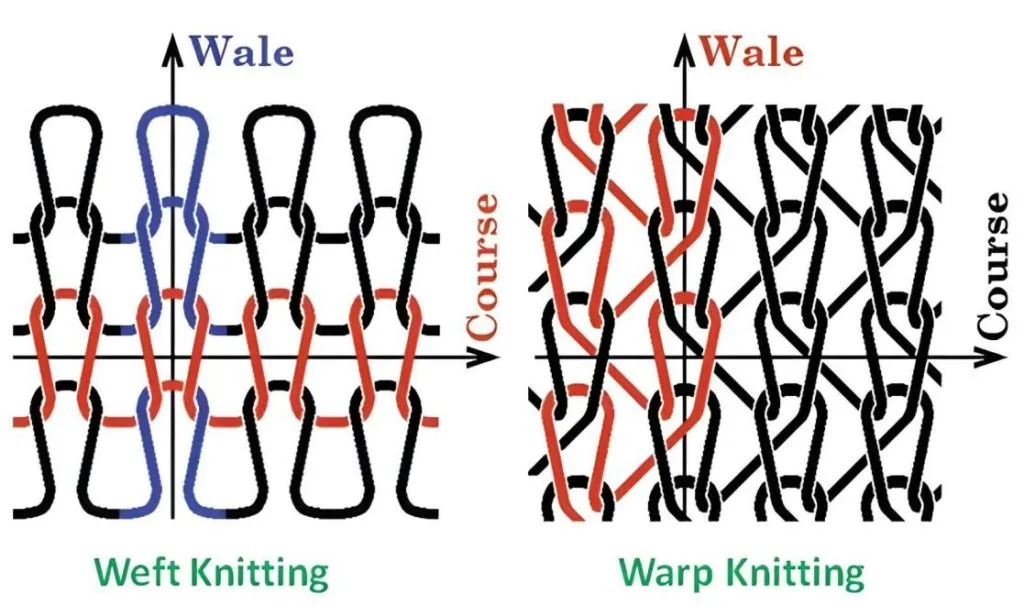
Weft knitting machine vs warp knitting machine at a glance
| Point | Weft knitting machine | Warp knitting machine |
|---|---|---|
| Yarn feed | One yarn at a time | Many yarns at the same time |
| Yarn direction | Side to side | Up and down the length |
| Fabric character | Soft and stretchy, fits the body | Strong and stable, little stretch |
| Shape over time | Can lose shape | Holds shape, stays firm after many washes |
| If a stitch breaks | Can unravel | Does not easily unravel |
| Typical products | T-shirts, sweaters, socks | Lace, swimwear, sportswear, mesh, technical fabrics |
Both are machine knitting and both are far faster than hand work. The warp side gains extra speed from using many yarns together, which is why plants with high-volume orders lean on it.
What a weft knitting machine does well, and where it gives up
Weft knitting is the comfort process. Because one yarn travels across the fabric, the loops can open and close with the body, so the cloth moves with the wearer. That is exactly what everyday wear, casual clothing and socks need.
The same construction is its weakness. A weft knit can lose its shape with use, and when one stitch breaks the damage can run. Anyone who has watched a ladder travel down a knitted garment has seen the mechanism: each loop depends on the single yarn that formed its neighbours.
What changes on the warp side
A warp knitted fabric is made from many yarns running lengthwise, so no single yarn carries the whole structure. The result is firm and durable: it holds its shape, does not easily unravel and stays firm wash after wash. The trade is stretch. Warp knits give less, which is why they are chosen for lace, swimwear, sportswear, mesh and technical fabrics, and why home textiles such as curtains and upholstery that must last for years sit on this side too.
In medical and industrial fabrics the requirement is different again: clean, breathable and durable for one, resistant to pressure and wear for the other. Those are stability requirements, and they point to warp knitting.
Weft insertion is not weft knitting
The word weft causes one regular mix-up. A tricot machine with weft insertion is a warp knitting machine. It lays extra yarn across the fabric while the warp yarns do the knitting. Our Tricot Machine with Weft Insertion shows what that looks like in hardware:
- An individual needle bar with compound needles, and a slider bar fitted with 1/2 in plate slider units.
- A sinker bar with compound sinker units to keep the fabric stable during knitting.
- Guide bars in carbon-fiber-reinforced material, light but strong.
- A weft-insertion system whose yarn-laying carriage holds 24 yarn ends.
- An electronically controlled let-off drive on each warp beam position, holding yarn tension uniform.
- Electronically controlled fabric take-up through a geared motor with four rollers, and a separate floor-standing batching unit.
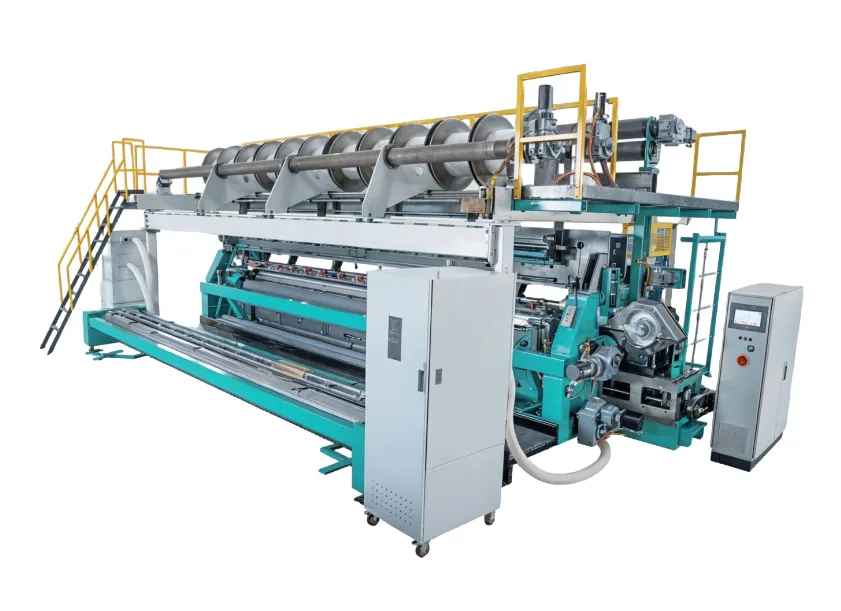
Patterning comes in two drives. The N-Drive uses three pattern discs with a tempi change gear. The optional EL-Drive uses three electronically controlled motors and lets all guide bars shog up to 50 mm, extendable to 80 mm for special fabrics. A Laserstop system stops the machine when it detects a fault, an integrated camera watches fabric quality, and the GrandStar Command System is where the operator sets and monitors all electronic functions.
Which machine fits which product
If the product is worn close to the body and judged on softness and stretch, such as T-shirts, sweaters or socks, then you are looking for a weft knitting machine.
If the product is judged on holding its shape, resisting runs or carrying load, such as lace, swimwear, mesh, upholstery or technical fabric, then you are looking for a warp knitting machine.
If you want a stable warp knit with extra yarn laid across it, then ask about weft insertion on a tricot machine, not about weft knitting.
What this page does not cover: we build warp knitting machines, so there are no circular or flat weft machine specifications here. Use the comparison above to decide which side you are on, and take weft machine sizing to a builder of that equipment.
If the answer is warp knitting
The next decision is which warp machine. Start with warp knitting machine types compared for the main families side by side, then read the types sorted by needle bed, needle and take-off. The group range and commercial terms are on grandstarcn.com. For a specific fabric, send the construction and the end use through our contact page.
Frequently Asked Questions
What is a weft knitting machine?
It is equipment that forms fabric from one yarn at a time, travelling side to side across the width. The cloth it produces is soft and stretchy and fits the body, which is why T-shirts, sweaters and socks are made this way. Its limits are shape retention and runs after a broken stitch.
What is the difference between warp knitting and weft knitting?
Yarn feed and direction. Warp work uses many yarns together running lengthwise and gives a firm, stable fabric that resists unravelling. Weft work uses a single yarn moving across and gives a soft, elastic cloth that can lose shape and can run if one stitch breaks.
Is a tricot machine with weft insertion a weft knitting machine?
No. It is warp equipment that lays additional yarn across the fabric while the lengthwise yarns form the loops. On our model the laying carriage holds 24 ends, and each beam position has its own electronically controlled let-off drive to keep tension uniform.
Which fabrics come from the warp side and which from the weft side?
Lace, swimwear, sportswear, mesh, curtains, upholstery and technical textiles for medical or industrial use are typical warp products, chosen for strength and stability. T-shirts, sweaters, socks and other everyday or casual garments that must stretch and feel soft are typical weft products.

Hey, I’m Vincent!
Solving complex challenges with precision and creativity in the warp knitting industry. Passionate about advancing textile engineering and turning innovative ideas into reality. Shaping the future of warp knitting.


