



Types of Warp Knitting Machines: Beds, Needles and Take-Off

The types of warp knitting machines are sorted three ways: by the number of needle beds, by the needle the machine knits with, and by the direction the fabric is drawn away from the needles. One machine sits in all three groups at once, so a quotation that only says tricot or raschel has told you a third of what you need to know.
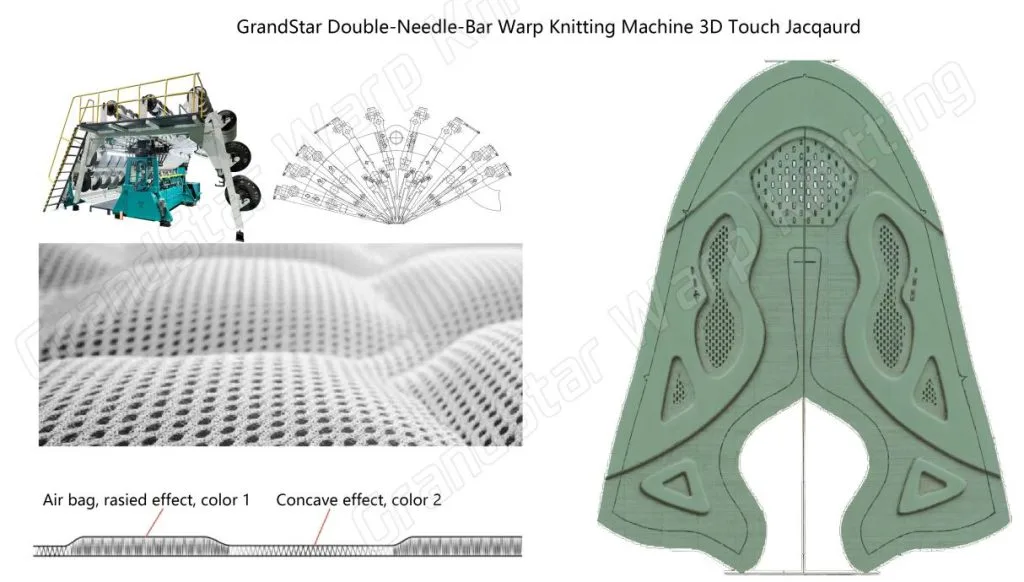
All of them share one basic structure. Yarns run in parallel lines straight into the machine instead of crossing the width one course at a time, which is why warp knitting makes fabric quickly and evenly. What differs between types is the set of parts built around that structure, because each type is built for a different job.
The three ways warp knitting machines are classified
| Sorted by | Groups | What the choice changes |
|---|---|---|
| Needle beds | Single needle bed, double needle bed | Fabric thickness and structure: basic light fabric on one bed, thicker, stronger and three-dimensional fabric on two |
| Needle | Crochet needle, tongue needle, compound needle | Which fabrics the machine handles and how fast and cleanly it runs |
| Fabric take-off direction | Tricot (fabric drawn downward), raschel (fabric drawn backward) | How much pulling force lands on the needles, and so how heavy a fabric the machine tolerates |
Read a specification against all three rows. A double needle bed raschel with compound needles and a single bed tricot with compound needles share a needle and almost nothing else.
By needle bed: single or double
A single needle bed machine has one bed and a simple structure. It is the usual choice for basic fabrics and for light, soft materials, and it is easy to run and to repair. Plants pick it for fast, steady output when the fabric design is not complicated.
A double needle bed warp knitting machine carries two beds. It makes more complex patterns, and the fabric comes out thicker and stronger. This is the group used when the product needs shape or structure of its own: three-dimensional fabrics, technical textiles and spacer fabrics. Our double needle bar machine page covers that group in detail.
By needle: crochet, tongue or compound
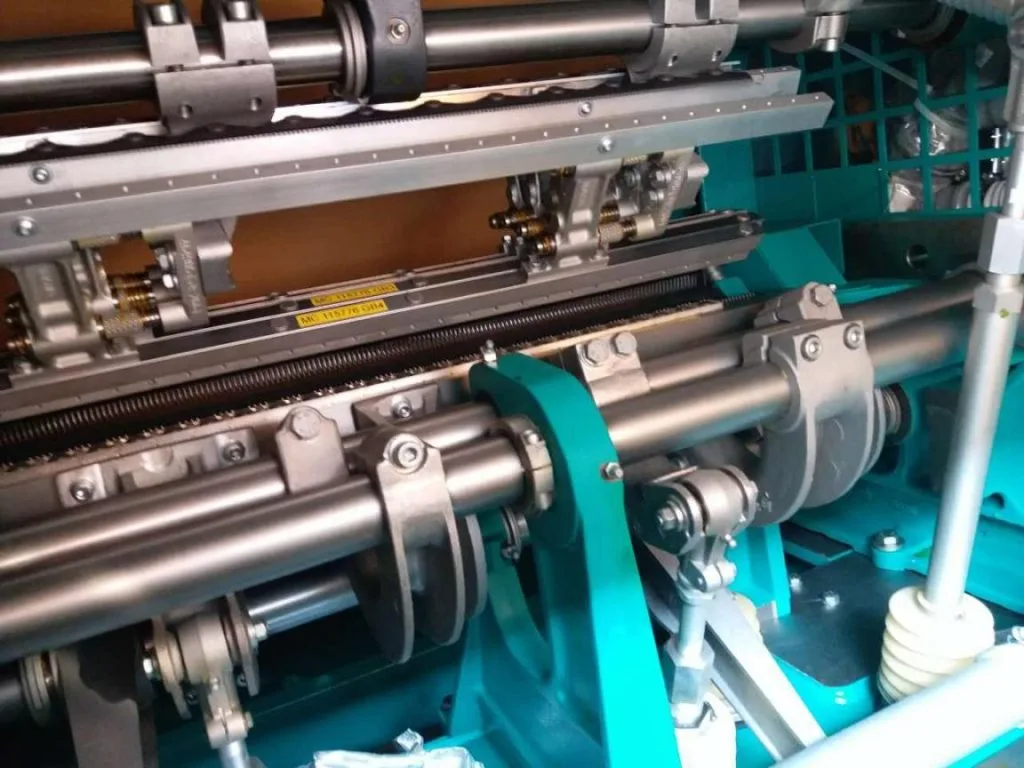
The needle decides more of the machine’s character than the frame does.
- Crochet needle. A simple, strong needle with a hook that pulls the yarn through the loops. A crochet warp knitting machine suits nets, lace and mesh, open structures and low-stretch fabric, and it needs little maintenance.
- Tongue needle. The needle carries a small latch that opens and closes to move the yarn. It is the flexible one: it runs light and heavy fabrics alike and handles detailed, tight designs.
- Compound needle. Two parts, a grooved needle and a tubular part, work together to hold and move the yarn. Compound needle machines are the ones used for fine, smooth fabric at high speed, and they are the common choice in modern plants.
The difference shows up under load. A fine crochet needle has little stiffness and bends when fabric tension climbs. A compound needle is stronger and carries more tension before it deflects.
By fabric take-off: tricot or raschel
This is the split most people mean when they ask about machine types, and it is a matter of geometry rather than branding.
On a tricot machine the fabric moves downward as it is made. There is no grid-shaped plate under the fabric; the sinker does that job, holding the loops and moving the fabric on. The fabric leaves at an angle of about 110 degrees to the needle bed, and that angle puts a strong pulling force on the needles. Push the tension too high with fine needles and they bend. Pull the yarn too hard even with stronger compound needles and the loop can slip back, at which point the machine stops knitting cleanly. That is why tricot is the home of smooth, light fabric: underwear, linings and other soft goods. The tricot machine page sets out the tricot range.
On a raschel machine the fabric is pulled backward. A comb-shaped plate holds the fabric, and the angle between fabric and needle bed opens to about 160 degrees, so the fabric lies nearly flat with the needles. The pulling force on each needle is low, and needles bend far less even when tension rises. Raschel machines therefore run more smoothly under heavy load and are the better fit for thicker fabrics, complex patterns, technical fabrics, nets and lace that need firm support. The raschel side is broken down further in our guide to raschel knitting machine types.
Which type fits your fabric
If the product is light, smooth and plain, such as lining or underwear fabric, then look at a single needle bed tricot machine with compound needles, and keep an eye on fabric tension because of the 110 degree take-off.
If the product is thick, heavily patterned, or an open net or lace, then the 160 degree raschel take-off is the safer geometry, because it keeps the load off the needles.
If the product needs its own thickness, such as a spacer or other three-dimensional fabric, then the needle bed count comes first and you are choosing among double needle bed machines.
This does not apply to weft knitting. Circular and flat weft machines are classified on different principles, and none of the three splits above carries over to them.
Where to go from here
Grand Star Technology has built warp knitting machines since 2012 from Fujian, China, across raschel, tricot, double raschel, lace, stitch-bonding and warping equipment, and both the mechanical parts and the control system can be adjusted to a customer’s fabric. The control panel reports speed, yarn use and fabric output while the machine runs, pattern settings can be saved and reused for repeat orders, and the system raises an alert when a part is due for checking.
The full range is listed on the warp knitting machines overview, and a side-by-side reading of the main families is in warp knitting machine types compared. Commercial terms and the wider group range are on grandstarcn.com. If you are not sure which group your fabric belongs to, send the fabric sample details and yarn through our contact page and name the product it is for; those two facts usually settle the bed count and the take-off direction in one reply.
Frequently Asked Questions
What are the different types of warp knitting machines?
They are grouped in three ways. By needle bed there are single and double bed machines. By needle there are crochet, tongue and compound designs. By fabric take-off there are tricot machines, which draw the cloth downward at about 110 degrees, and raschel machines, which pull it backward at about 160 degrees.
What is a double needle bed warp knitting machine used for?
It carries two beds instead of one, so it can build thicker, stronger and more complex fabric than a single bed model. It is the group chosen for three-dimensional constructions, technical textiles and spacer fabric, where the product needs shape or structure of its own.
What is a crochet warp knitting machine?
It is a model that knits with a simple, strong hooked needle. The hook pulls the yarn through the loops. This design suits nets, lace, mesh and other open or low-stretch structures, needs little maintenance, and is a sound pick for basic patterns.
Why does a raschel machine handle heavy fabric better than a tricot machine?
Geometry. On a raschel the cloth leaves at about 160 degrees to the bed and lies nearly flat with the needles, so the pulling force on each one is low. On a tricot the angle is about 110 degrees, the load is higher, and fine needles can bend when tension climbs.

Hey, I’m Vincent!
Solving complex challenges with precision and creativity in the warp knitting industry. Passionate about advancing textile engineering and turning innovative ideas into reality. Shaping the future of warp knitting.


