



Used Karl Mayer Warp Knitting Machines: How to Inspect One

Mills rarely get burned because a warp knitting machine was used. They get burned because the machine was a poor fit for the fabrics they actually sell, because nobody inspected it properly, or because it arrived with no documentation and no support. Those three failures are all avoidable before money moves, and the checks below are the ones that catch them.
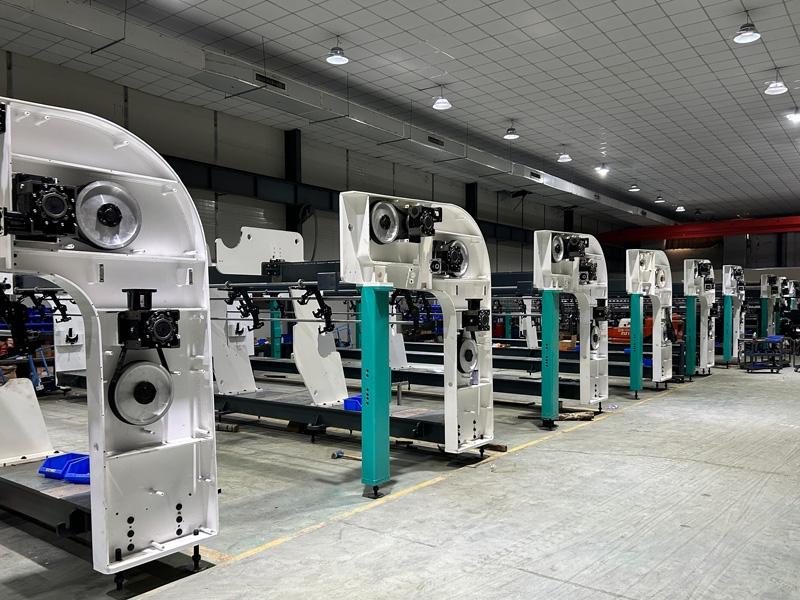
Fit for purpose comes before the number on the invoice
Downtime never appears on the invoice. A cheap line becomes expensive the day it cannot meet your style plan, whether you run elastic, pile or breathable grounds. Three questions settle fit before anything else is worth discussing:
- Does the guide bar configuration match the fabric constructions you sell now and the ones on your roadmap for the next two seasons?
- Can the machine reach your target gauge, hold stitch density, and keep hand feel consistent across shifts rather than only on a demo run?
- Is there documentation of recent output and standard settings, or does the seller only have photographs?
Match the machine to the patterns you sell, not to the patterns in the listing photo. If your book includes automotive interiors or performance sportswear, variance is what erodes the margin, so the machine has to allow practical tightening and opening of the structure without long trials. Clean electricals, legible manuals and an aligned guide bar setup shorten the learning curve, and the learning curve is where startup waste comes from.
Where the honest listings are
You do not need a long list of websites. You need a short list of channels that publish configuration, recent use and intended application rather than year and paintwork.
- Networks aligned to a machine builder. Partners who work in warp knitting can explain guide bar layouts, fabric constructions and density windows in production terms, which is what prevents a mystery configuration derailing commissioning.
- Application-focused brokers. A good broker matches machines to outcomes, not to specifications in the abstract: elastic fabric, pile, mosquito nets, breathable grounds, decorative lace. If gauge, yarn and density ranges are not part of the conversation, the match is being made on price alone.
- Documented plant exits. Machines sold with notes on recent production, target fabrics, run speeds, typical stitch settings and changeover routine. Evidence of what the machine made last month outweighs any repaint.
- Marketplaces with technical filters. Listings should carry guide bar count, available gauges and common end uses. A seller who is vague about fundamentals is telling you something useful, so move on.
What to verify on a tricot line
A capable tricot machine is defined by its guide bars, usually 2, 3 or 4, and by stable density control. That range covers everything from elastic fabric to pile construction, and precise gauge and density adjustment is what lets you move from open to tight structures without a long tuning cycle at every seasonal transition.
Typical tricot output to check the machine against includes mosquito nets, mattress and bedding bases, embroidery grounds, tulle and coating substrates, banner and signage media, automotive interiors, upholstery, sportswear, plush, outerwear and lingerie. Against that list, verify the guide bar layout, the available gauge, and whether frame, beams and take-up can still hold density consistently across your own style range rather than across the seller’s.
What to verify on a raschel line
Raschel platforms, single or double needle bar, are judged on interlooping efficiency, smooth fabric winding and pattern capability. Material compatibility is worth confirming directly, since these machines are commonly run with cotton, silk, nylon and polyester, and a machine set up for one family is not automatically ready for another.
The decisive check is the pattern head. Confirm that the cam and patterning elements can actually produce your motifs, from fine lace through to netting, and that the needle bar choice does not quietly rule out the yarns you buy. A good deal on a machine whose pattern head cannot reach your designs is not a deal.
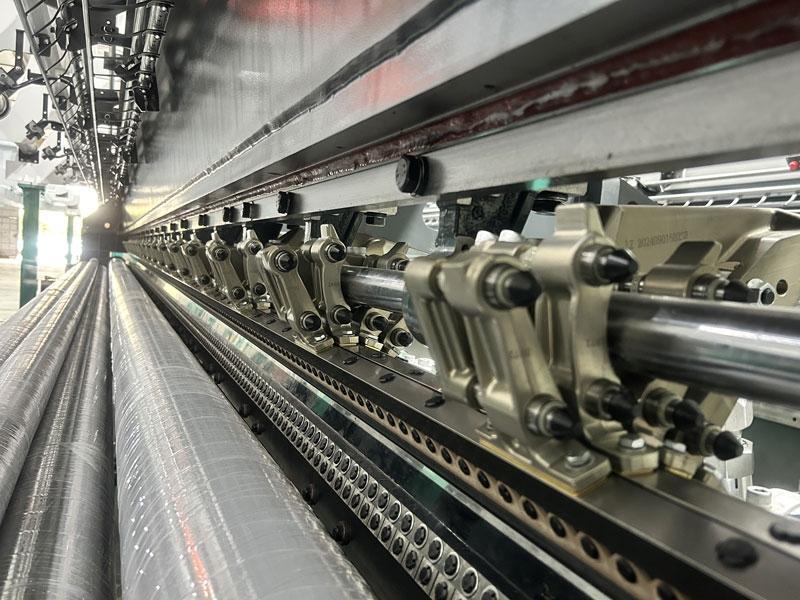
The inspection checklist
| Area | What to check | What a bad answer means |
|---|---|---|
| Configuration fit | Guide bar count, gauge range, density control, yarn paths | The machine will make fabric, just not yours. |
| Proven output | Fabrics made recently, speeds achieved, quality metrics, scrap rate | No production record usually means the machine has been standing. |
| Mechanical health | Beams, bearings, take-up, drive system, lubrication history | Deferred lubrication is the most expensive item on this list to correct. |
| Controls and documents | PLC and HMI condition, manuals, wiring diagrams, spare parts list | Missing diagrams turn every future fault into an investigation. |
| Commissioning plan | Initial settings, yarn specifications, trial fabric, acceptance criteria | Without acceptance criteria you have no basis to reject the machine after installation. |
Run this list before you negotiate, not after. Every item on it is easier to raise while the seller still wants the sale.
How to decide once the checks are done
If the configuration fits your current SKUs and the production record is documented, then the remaining risk is mechanical, and a proper inspection of beams, bearings and drives is worth the travel cost.
If the configuration nearly fits but the pattern head or gauge falls short, then treat the shortfall as a permanent limit rather than something to be fixed later, and price your decision accordingly.
If no manuals, wiring diagrams or settings survive, then plan a longer ramp-up and budget the engineering time explicitly, because your team will be rediscovering settings that someone once wrote down.
This section does not apply to a machine you intend to rebuild rather than run as found. A planned rebuild changes the criteria completely: element condition and parts availability lead, and the fabric-fit questions above only become relevant once the rebuild specification is fixed.
Getting a second opinion before you commit
Because we build and commission this class of equipment, we read used offers backwards from the fabric: your catalogue tells us which guide bar counts and constructions a machine has to support, whether elastic or pile structures need density held across airy and close weaves, and what the first week of settings should look like. That check takes a listing specification and your style list, and it costs a lot less than freight on the wrong machine.
For context on what current equipment is expected to do, see our warp knitting machines overview, the rebuild route under reconditioned machines, and consumable elements in warp knitting machine parts. Machine configurations are listed on grandstarcn.com. Send your target fabrics and the listing specification through our contact page and we will tell you what the listing has left out.
Frequently Asked Questions
What should I check first on a used warp knitting machine?
Configuration fit, before condition and before anything financial. Guide bar count, gauge range, density control and yarn paths decide whether the machine can make the fabrics you sell. A machine in excellent condition that cannot reach your constructions is still the wrong machine.
How do I know the machine was actually running?
Ask for recent production evidence: which fabrics it made, the speeds achieved, quality metrics and scrap rates, plus the typical stitch settings and changeover routine. Documentation of last month’s output tells you more than a repaint or a year of manufacture.
What documents should come with the machine?
Manuals, wiring diagrams and a spare parts list, along with the condition of the PLC and HMI. Missing diagrams turn every future fault into an investigation, and that cost lands on your maintenance team every year you own the machine.
Can a used tricot machine handle both elastic and pile fabric?
It depends on the guide bar layout and how well density is still controlled. Tricot machines with 2, 3 or 4 guide bars cover a wide span from elastic fabric to pile, but verify that frame, beams and take-up hold density consistently across your own style range, not just on the seller’s demo article.
Is a used machine a bad idea for lace or netting?
Not by itself, but the pattern head decides it. Confirm the cam and patterning elements can produce your motifs and that the needle bar choice does not limit the yarns you buy. If the pattern head falls short, treat it as a permanent limit rather than something to correct after purchase.

Hey, I’m Vincent!
Solving complex challenges with precision and creativity in the warp knitting industry. Passionate about advancing textile engineering and turning innovative ideas into reality. Shaping the future of warp knitting.


