



Jacquard Warp Knitting: Reading a Triple Jacquard Raschel Spec

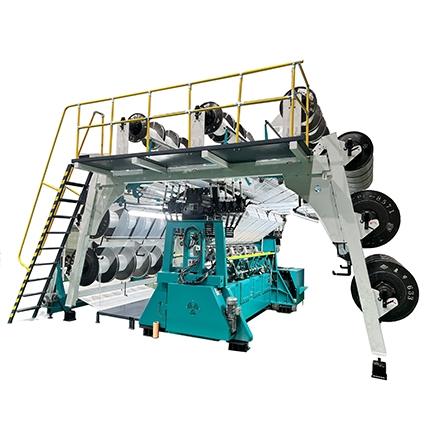
Triple jacquard warp knitting puts three groups of jacquard guide bars on a double needle bar raschel frame, which is how a single continuous process builds a thick, stable fabric and a layered pattern at the same time. What follows is the part of the specification that decides whether that combination holds up in production rather than only in a sample.
Where triple jacquard normally costs you money
Detailed patterns usually mean longer setup, more waste, and more load on the handful of technicians who know the machine. Speed usually means simplified designs. With shorter order cycles, each new style turns into a bet, and the bet is settled by how fast the machine returns to a known state after a change.
Warp knitting starts with an advantage here. Many yarns are fed in parallel and looped on two needle bars, so the structure is dense and stable at industrial speed by construction rather than by tuning. Jacquard control on top turns that structure into pattern. Whether it stays profitable depends on one thing: are the settings storable and repeatable, or does each style start from zero.
The specification, item by item
Our Triple Jacquard Double Raschel 7/3 is built around the configuration below.
| Item | Specification | What it decides in production |
|---|---|---|
| Working width | About 3454 mm (136 in) | Wide-width fabric, several garment panels, or mirrored layouts in one run, which is where cutting-room yield comes from. |
| Gauge range | E18 to E28 | Heavier structures for technical use and finer fabrics for apparel and home textiles on the same equipment base. |
| Ground guide bars | Four | The basic fabric structure and its stability. |
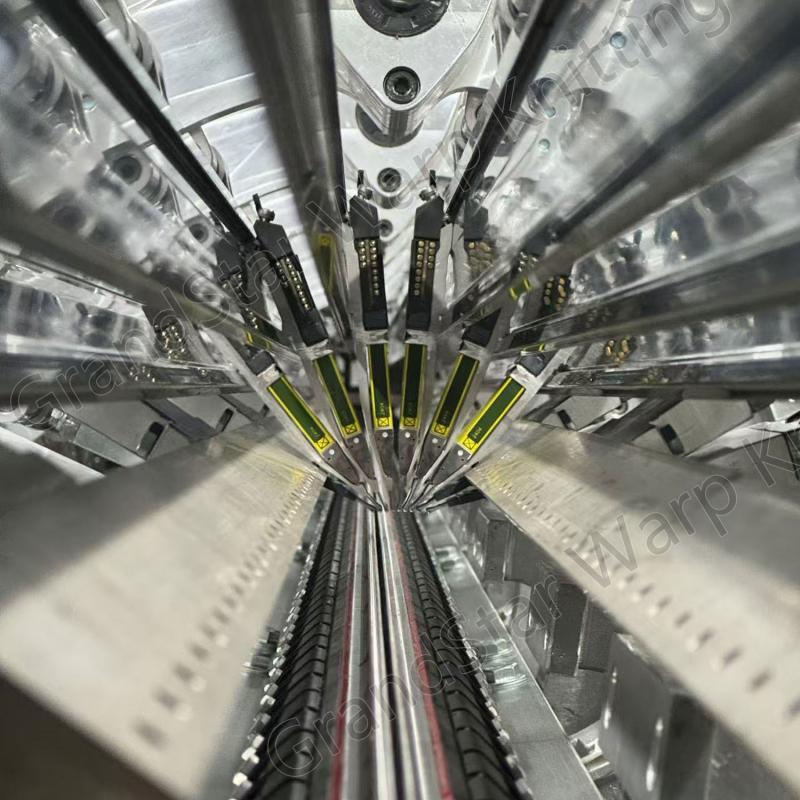
| Jacquard guide bars | Three groups, piezo | Patterning and fine detail; the reason motif edges stay sharp instead of blurring at repeat boundaries. |
| Needle and comb bars | Two individual latch needle bars, two knock-over comb bars, two stitch comb bars | Clean stitch formation on both beds, with fewer broken yarns and distorted motifs. |
| Knock-over comb bar distance | Continuously adjustable, 2 to 12 mm | Thickness, loop shape and hand feel; this is the setting you move when going from automotive upholstery to a lighter fashion fabric. |
| Connected load | Around 7.5 kW at 380 V, plus or minus 10 percent, three-phase | Standard plant power, so most knitting floors need no special electrical work to install it. |
The 2 to 12 mm adjustment is the one technicians touch most. Because it is continuous rather than stepped, a structure that works can be written down and repeated instead of being rebuilt by trial every time the product changes.
Control, let-off and take-up
The machine runs under the GrandStar Command System, which centralises speeds, tensions and pattern movement on one screen, stores style parameters for repeat orders, and shows status without stopping the run to check it.
Two elements matter as much as the jacquard head:
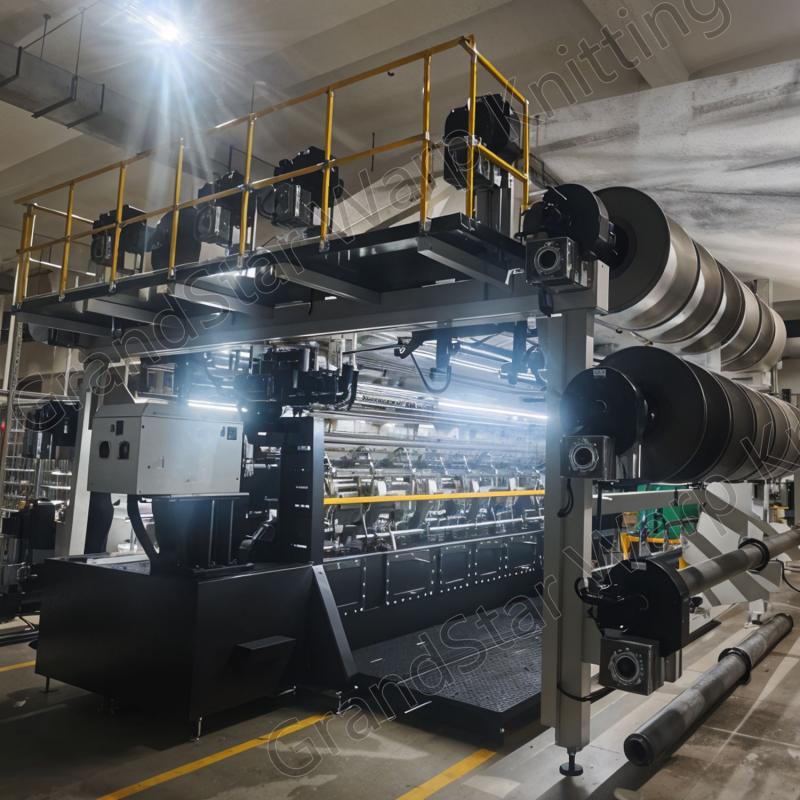
- Electronically controlled yarn let-off at each fully mounted warp beam position, which holds yarn tension steady on sensitive yarns and at higher operating speeds.
- Electronically regulated fabric take-up with multiple rollers, which keeps fabric density consistent along the full length of the roll instead of only at the start of it.
Running conditions belong in the specification rather than in a footnote. The equipment is designed to run best at about 25 degrees Celsius with controlled humidity, and a circulating air heat exchanger with a monitored oil filtration system keeps the motion parts in condition. Plants that let those drift usually discover it through wear, not through an alarm.
What the fabric is used for
- Fashion and apparel. Outerwear, activewear and accessories that need pattern-rich surfaces with abrasion resistance and dimensional stability.
- Home textiles. Upholstery, curtains and bedding where the decorative design has to stay sharp through long use.
- Technical textiles. Automotive interiors, industrial fabrics and protective layers built as engineered structures.
- Occasion fabrics. Bridal, couture and event textiles where the jacquard texture is part of the brand identity.
Is this the right machine for your programme?
If your orders are short-run and pattern-led, then the stored-parameter side of the specification matters more to you than width: your cost is in setup hours, and recallable style parameters are what remove them.
If you are producing wide technical fabric such as automotive interiors, then the 3454 mm width and the 2 to 12 mm knock-over range are the two items to check first, because thickness control and panel layout decide your yield.
If your range spans apparel and technical fabric, then the E18 to E28 span is the reason to consider a single machine base rather than two narrower ones.
This section does not apply to single-jacquard or ground-only programmes. There the three jacquard guide bar groups are capacity you pay for and do not use, and a simpler raschel configuration will give you a better return on the same floor space.
Installation, training and service
A machine of this complexity is only as good as the team operating it, which is why installation comes with manuals, online sessions, video guidance and on-site training matched to your product mix. These machines run in more than 20 countries, with dedicated local teams in Turkey, India, Vietnam, Indonesia and the USA. In those regions engineers visit on a regular schedule, typically every one to two months, to check machine performance, review maintenance routines and work through new styles with your technicians. Where there is no local team yet, support starts online in real time and engineers are sent from the nearest hub when hands-on work is needed.
If you are weighing a jacquard development against your existing raschel capacity, start from the fabric: thickness, repeat size and width tell you more about the machine you need than any headline speed. Compare configurations under double jacquard warp knitting machines, place them against the wider family in warp knitting machine types, and see the full listing on grandstarcn.com. Send your fabric targets and repeat size through our contact page and we will tell you which configuration matches them.
Frequently Asked Questions
What is triple jacquard in warp knitting?
It is a double needle bar raschel setup carrying three groups of piezo jacquard guide bars alongside four ground guide bars. The ground bars build structure and stability while the three jacquard groups handle patterning, so a thick fabric and a layered pattern are produced in one continuous process.
What gauge range does the machine cover?
E18 to E28. That span is why one machine base can cover heavier structures for technical applications and finer fabrics for apparel and home textiles, instead of forcing two separate machines for the two markets.
How do I change fabric thickness and hand feel?
Through the knock-over comb bar distance, which adjusts continuously from 2 to 12 mm. Because the adjustment is continuous rather than stepped, a setting that works can be recorded and repeated when you switch between, for example, automotive upholstery and a lighter fashion fabric.
What power supply and room conditions does it need?
Around 7.5 kW total connected load on standard 380 V three-phase power at plus or minus 10 percent, so most plants need no special electrical infrastructure. Plan for roughly 25 degrees Celsius with controlled humidity; the circulating air heat exchanger and monitored oil filtration handle the rest.
What support is available after installation?
Manuals, online sessions, video guidance and on-site training tailored to your product mix. The machines run in over 20 countries with local teams in Turkey, India, Vietnam, Indonesia and the USA, where engineers visit every one to two months. Elsewhere support starts online, with engineers dispatched from the nearest hub.

Hey, I’m Vincent!
Solving complex challenges with precision and creativity in the warp knitting industry. Passionate about advancing textile engineering and turning innovative ideas into reality. Shaping the future of warp knitting.


