



Malivlies Stitch Bonding Machine: What It Makes and How to Set It Up

Malivlies is the stitch bonding process in which a fibrous web is stitched into a stable fabric by the knitting elements, so the strength is added mechanically rather than by a chemical binder. On the Malivlies stitch bonding machine in our range that output goes into stitch-bonded industrial fabrics, medical bandages, clothing interlining and curtain fabric, on working widths from 2000 to 6000 mm.
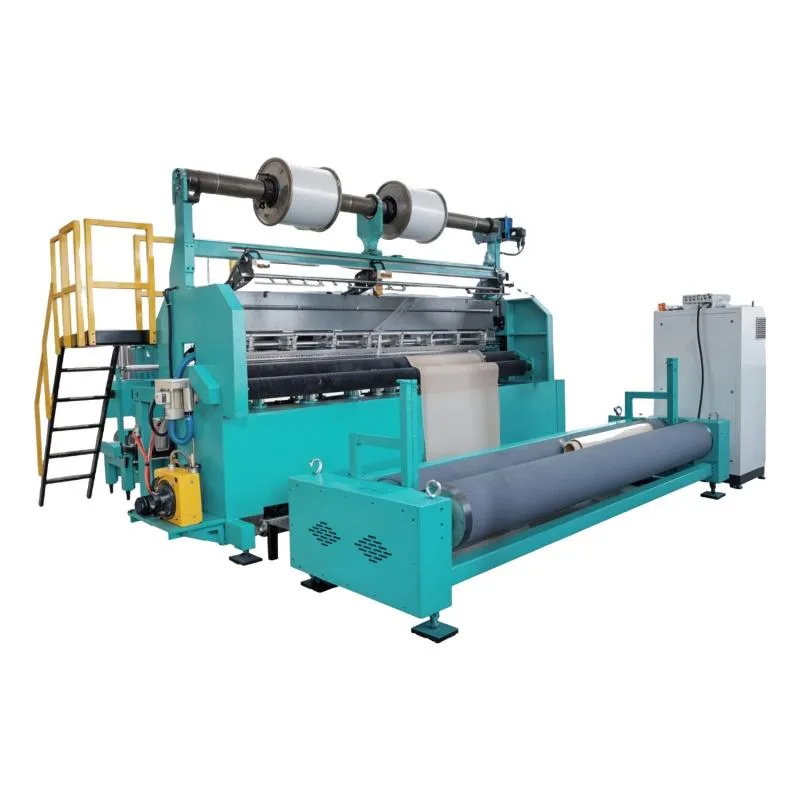
What Malivlies stitch bonding is
The line takes a web and stitches it into a fabric rather than entangling it or curing it. Because the stitch carries the strength, many Malivlies recipes avoid chemical binders altogether, which takes cure time and its emissions out of the process.
That is also what separates it from the yarn-stitched constructions. If your product is built from yarn systems rather than from a web, the Maliwatt machine and the Malimo machine are the ones to compare; Malivlies is the web route.
Replacement knock-over sinkers for a stitch bonding machine are listed on their own page, together with compound needles for stitch bonding and guide needles. This page stays on the Malivlies platform itself.
The two systems that run the machine
An integrated computer coordinates the main drive, yarn feeding and fabric take-up, and the operator works from a touch screen that shows live data. The electrical side is a speed-regulated drive with power-failure safety and a single speed control through a frequency converter.
The main motor is sized by width: 13 kW for machines from 2000 to 4400 mm and 18 kW from 4400 to 6000 mm. Let-off and take-up each run on a geared motor with its own frequency converter, which is why tension holds across the full width once it has been set.
Width, gauge and the elements that shape the fabric
Working width follows the order and the roll format: 2000, 2800, 3600, 4400, 4800, 5400 or 6000 mm. Gauge follows hand, weight and throughput: F7, F12, F14, F16, F18, F20 or F22. These two choices decide more about the fabric than any adjustment made later, which is why they are fixed before threading rather than after a disappointing trial.
The element set is a compound needle bar, closing wire bar, knock-over sinker bar, supporting bar, counter-retaining bar and one or two ground guide bars. Their alignment sets the stitch structure; a bar that is out of line shows up later as pattern drift that no tension change will cure. The wider needle family is covered in our warp knitting needle overview.
Pattern comes from the N-drive with a pattern disc and an integrated tempi change gear. A single pattern disc keeps the setup simple: start from the standard disc and move tempi towards the target weight and handle instead of rebuilding the setup.
Start-up order that gets saleable fabric on the first run
Commissioning follows one sequence, because each step constrains the next one.
- Yarns and beams. Confirm yarn specification and beam build before anything is threaded. The frame takes one or two warp beam positions for sectional use, with a maximum flange diameter of 30. Clean creels and correct tension here prevent most of the end breaks that would otherwise appear an hour into the run.
- Width and gauge. Fix both from the order, as above.
- Elements. Install and align the full bar set.
- Pattern drive. Set motif and stitch density on the N-drive, pattern disc and tempi change gear.
- Let-off. The electronically controlled let-off runs on a geared motor with a frequency converter. On sensitive programmes add the optional electronically controlled yarn stop motion, which halts the line on a yarn fault instead of letting a length of off-spec fabric reach the batch.
- Take-up and batching. The electronically controlled take-up keeps winding stable. Standalone batching uses a friction drive with pressure roller up to a maximum batch diameter of 914 mm (36 inches), driven by a geared motor with an integrated frequency converter for an even roll build.
- Trial, inspect, lock. Start slow, check edges, stitch stability and tension balance across the full width, make small trims from the touch screen, then lock the settings.
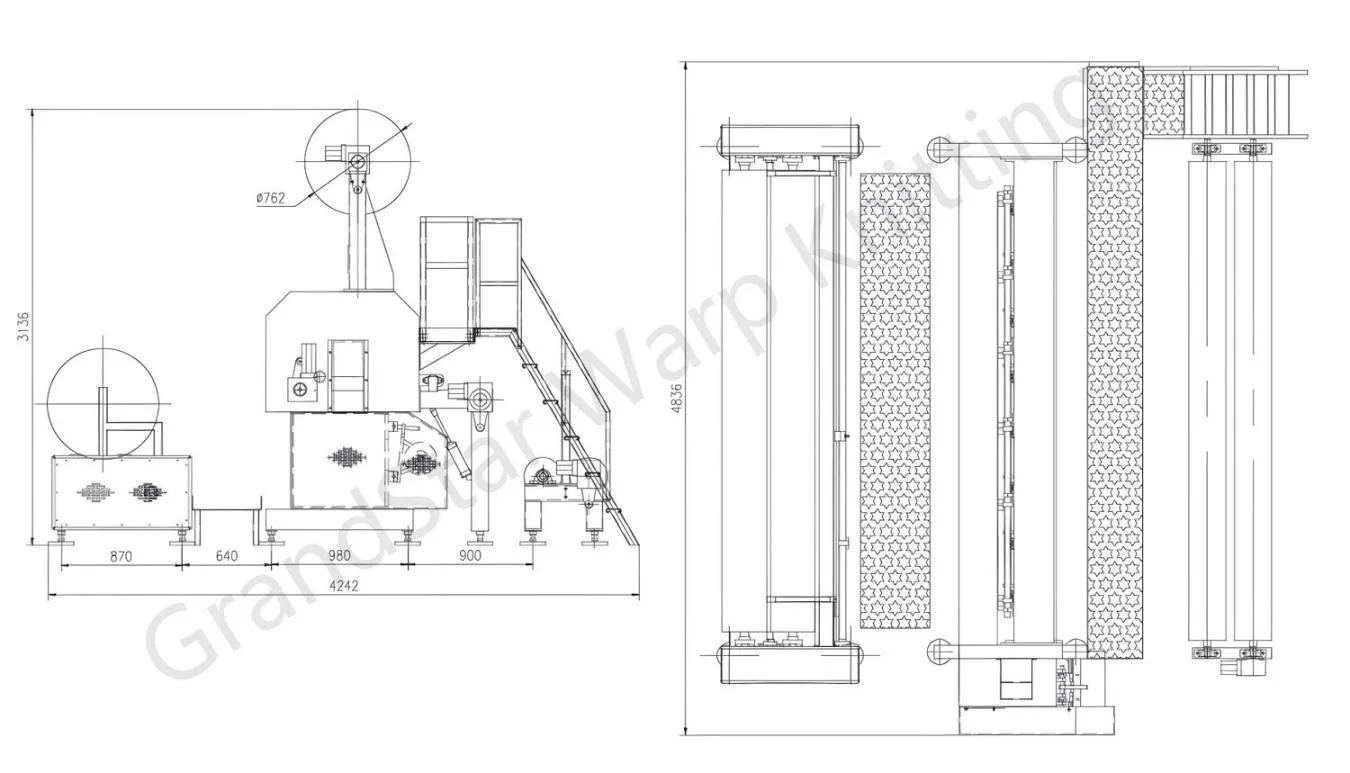
Quick reference parameters
| Item | Specification |
|---|---|
| Working widths | 2000, 2800, 3600, 4400, 4800, 5400, 6000 mm |
| Gauges | F7, F12, F14, F16, F18, F20, F22 |
| Pattern drive | N-drive with pattern disc, integrated tempi change gear, single pattern disc |
| Warp beam support | 1–2 positions, max flange Ø30 |
| Yarn let-off | Electronic drive, geared motor with frequency converter |
| Yarn stop motion | Electronic, optional |
| Fabric take-up | Electronic, geared motor with frequency converter |
| Batching | Standalone friction drive with pressure roller, max Ø914 mm (36″), geared motor with integrated frequency converter |
| Main motor | 13 kW for 2000–4400 mm; 18 kW for 4400–6000 mm |
Which setting to change, and when
If the fabric comes out too heavy or too open, then move tempi on the pattern drive first; width and gauge were chosen with the order and are not tuning knobs. If end breaks appear early in the run, then look at creel cleanliness and beam tension before touching the let-off. If the fault is pattern drift, then re-check bar alignment, because tension changes will not fix it.
These rules apply to the web-stitched Malivlies platform. On the yarn-stitched Maliwatt and Malimo machines the yarn systems add levers that this page does not cover.
Record the chosen gauge, tempi setting, yarn type and take-up speed on the route card for each product, not in an operator’s notebook. Teams that do this bring a repeat order back up in a fraction of the time and stop depending on whichever shift leader remembers the settings. It is the cheapest process improvement available on this machine.
Service and the next step
Support runs on professional manuals, online guidance, a video library and on-site training matched to your product mix, whether that is bandages, interlining or curtain fabric. In regions without a local team the first response is real-time online support, with engineers dispatched from the nearest hub when the work needs hands on it.
To plan a guided start-up, send your web or yarn details, target fabric weight and end use through our contact page; commercial terms and the wider group range are handled at grandstarcn.com.
Frequently Asked Questions
What does a Malivlies stitch bonding machine make?
It stitches a fibrous web into stable fabric for stitch-bonded industrial fabrics, medical bandages, clothing interlining and curtain fabric. Because strength is added mechanically by the stitch, many recipes run without a chemical binder, which removes cure time from the process.
Which working widths and gauges are offered?
Working widths of 2000, 2800, 3600, 4400, 4800, 5400 and 6000 mm, and gauges F7, F12, F14, F16, F18, F20 and F22. Width follows the order and roll format; gauge follows the hand, weight and throughput you need.
How big is the main motor on the Malivlies machine?
13 kW on widths from 2000 to 4400 mm and 18 kW from 4400 to 6000 mm. The drive is speed-regulated through a frequency converter with power-failure safety, and let-off and take-up each have their own geared motor and converter.
What is the correct start-up order?
Prepare yarns and beams, fix width and gauge, verify and align the knitting elements, configure the pattern drive, thread and set the let-off, set take-up and batching, then run a trial, inspect and lock the recipe. Each step constrains the next, so the order avoids rework.
How is Malivlies different from Maliwatt and Malimo?
Malivlies works from a fibrous web that the knitting elements stitch into fabric. Maliwatt and Malimo are yarn-stitched constructions built from yarn systems. If your product starts from yarn rather than a web, compare those two platforms before fixing a configuration.

Hey, I’m Vincent!
Solving complex challenges with precision and creativity in the warp knitting industry. Passionate about advancing textile engineering and turning innovative ideas into reality. Shaping the future of warp knitting.


