



Malimo Stitch Bonding Machine: Widths, Gauges and Bar Setup

A Malimo stitch bonding machine locks fibres together with stitching yarn rather than weaving or knitting them, and the configuration you order — working width, gauge, bar set, beam count — decides which fabrics you can actually run on it. This page walks the specification sheet in the order the decisions have to be made.
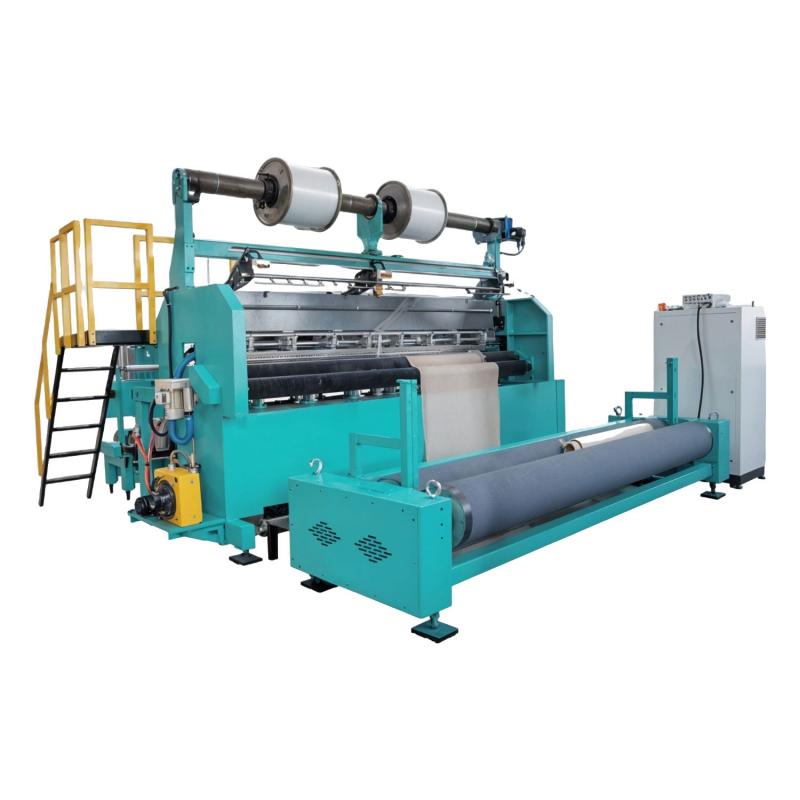
What stitch bonding does that weaving does not
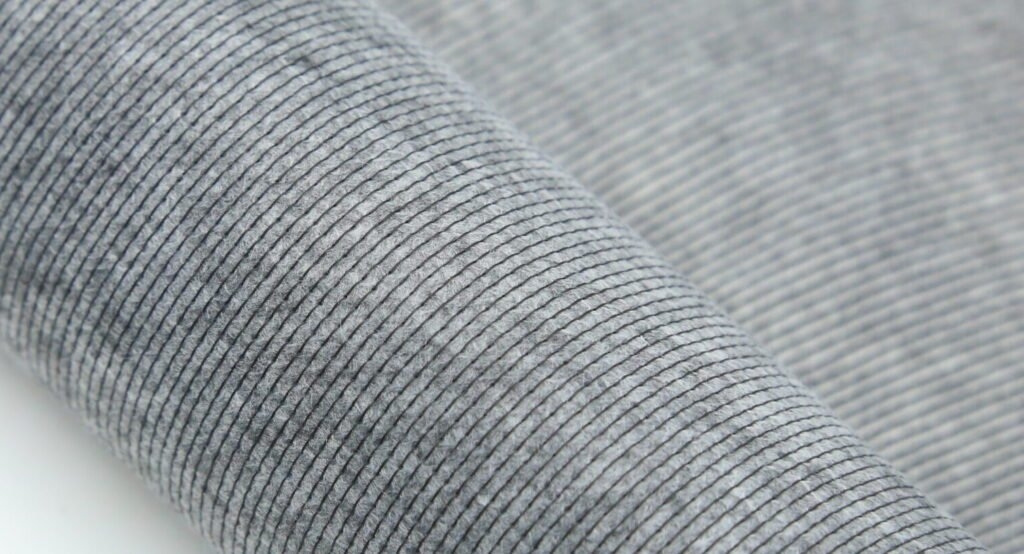
Stitch bonding joins fibres with stitching threads. There is no weaving and no conventional knitting of the base material — the stitches are what hold the web in place. The result is a fabric that holds its dimensions and stays light for the strength it carries, which is why the output ends up in automotive interiors, ground reinforcement, medical fabrics and sports goods rather than in general apparel.
For a buyer that has one practical consequence: most of the fabric character comes from settings — stitch pattern and stitch tightness — not from the base structure. Which is also why the pattern drive and the guide bar count deserve more of your attention during quoting than the headline working width does.
Working width and gauge: the two decisions you cannot revisit
The platform is built in seven working widths — 2000, 2800, 3600, 4400, 4800, 5400 and 6000 mm — and seven gauges: F7, F12, F14, F16, F18, F20 and F22, running from the coarsest to the finest in the range.
| Decision | Options on this platform | What it fixes once the machine is built |
|---|---|---|
| Working width | 2000 / 2800 / 3600 / 4400 / 4800 / 5400 / 6000 mm | Maximum fabric width and the floor space you have to clear |
| Gauge | F7, F12, F14, F16, F18, F20, F22 | How fine a stitch you can form |
| Ground guide bars | 1 or 2 | How many yarn systems you can lap into one fabric |
| Warp beams | 1 or 2, flange up to 30 in diameter | How long you run between beam changes |
The bar set, part by part
The knitting section carries a compound needle bar, a closing wire bar, a knock-over sinker bar, a supporting bar and a counter-retaining bar. On top of that you choose one or two ground guide bars, depending on the structure you intend to build.
Pattern movement comes from an N-drive with a pattern disc, together with a tempi change gear drive and one pattern disc. If your production plan involves frequent pattern changes rather than long single-pattern campaigns, this is the section of the quotation to press hardest on.
Yarn feed, take-up and batching
Yarn let-off is electronically controlled, driven by a geared motor with a frequency converter. An electronic yarn stop motion is available on top of that, and it is worth specifying if your rolls are long — it is what stops one broken end running into an entire batch before anybody walks past the machine.
Fabric take-up is electronic as well, again on a geared motor. The batching device rolls the fabric up through a pressure roller and takes a roll up to 914 mm (36 inches) in diameter. A control computer coordinates the main drive, the yarn feed and the take-up together, and the operator works from a touchscreen that shows live production data while the machine runs.
If you run one fabric, order differently than if you run twenty
If your order book is dominated by one or two repeat fabrics, then take the narrowest width that covers them, a single ground guide bar and one warp beam position. You spend less on the machine and less on the beam handling that comes with it, and nothing in that configuration limits a product you are actually selling.
If you expect the structure to change often, then specify two ground guide bars and two warp beam positions from the start. Adding a second yarn system after installation is not a settings change.
Neither rule applies when the fabric is defined by a customer specification you do not control — a reinforcement layer written into an engineering drawing, for instance. There the gauge and width are given, and the configuration follows the drawing rather than your order book.
Related machines on this site
- Malimo machine — the platform seen from the fabric side.
- Five reasons to choose a Malimo stitch bonding machine.
- Maliwatt stitch bonding machine and Malivlies stitch bonding machine — the neighbouring platforms in the same family.
If you already know the fabric you need to make, send the structure, target width and yarn type and we will work back to a width and gauge before anyone quotes a model — start from our contact page.
Frequently Asked Questions
What working widths does the Malimo stitch bonding machine come in?
Seven working widths are offered: 2000, 2800, 3600, 4400, 4800, 5400 and 6000 mm. The width fixes your maximum fabric width and the floor space the machine needs, so it is worth deciding against your actual product range rather than against a future one.
What gauges are available?
F7, F12, F14, F16, F18, F20 and F22, from the coarsest to the finest in the range. Gauge sets how fine a stitch you can form and cannot be changed after the machine is built.
How many guide bars does it have?
One or two ground guide bars, chosen at order. Alongside them the knitting section carries a compound needle bar, closing wire bar, knock-over sinker bar, supporting bar and counter-retaining bar.
How big a roll can it batch before I have to stop?
The batching device uses a pressure roller and takes a roll up to 914 mm (36 inches) in diameter. Fabric take-up is electronically controlled on a geared motor and is coordinated with the main drive by the machine’s control computer.
Is stitch bonding the same as knitting?
No. Stitch bonding holds fibres together with stitching threads instead of weaving them or knitting the base material itself. That is what gives the fabric its dimensional stability while keeping it light for the strength it carries.

Hey, I’m Vincent!
Solving complex challenges with precision and creativity in the warp knitting industry. Passionate about advancing textile engineering and turning innovative ideas into reality. Shaping the future of warp knitting.


